Why I have sacred spaces is pretty easy to answer for me. My sacred spaces are places for spellcraft and worship that are spread throughout my home. This incorporates spirituality into my everyday life instead of “designating it to a corner”. This is going to be a MASSIVE post with lots of text and lots of pictures, so fair warning… it’s probably going to take quite a while to get through. (And, as a side note… in this post, all of the pics will be clickable for larger images.)
That said, I thought you might like a tour of my sacred spaces. This post will be a sort of combination of a ‘what’s on my altar” tour, as well as a general tour of the sacred spaces in my home. I’ve been planning this post for some time, but Becca over at Intuition Tarot recently did a video that inspired me to get my ass in gear and get it done.
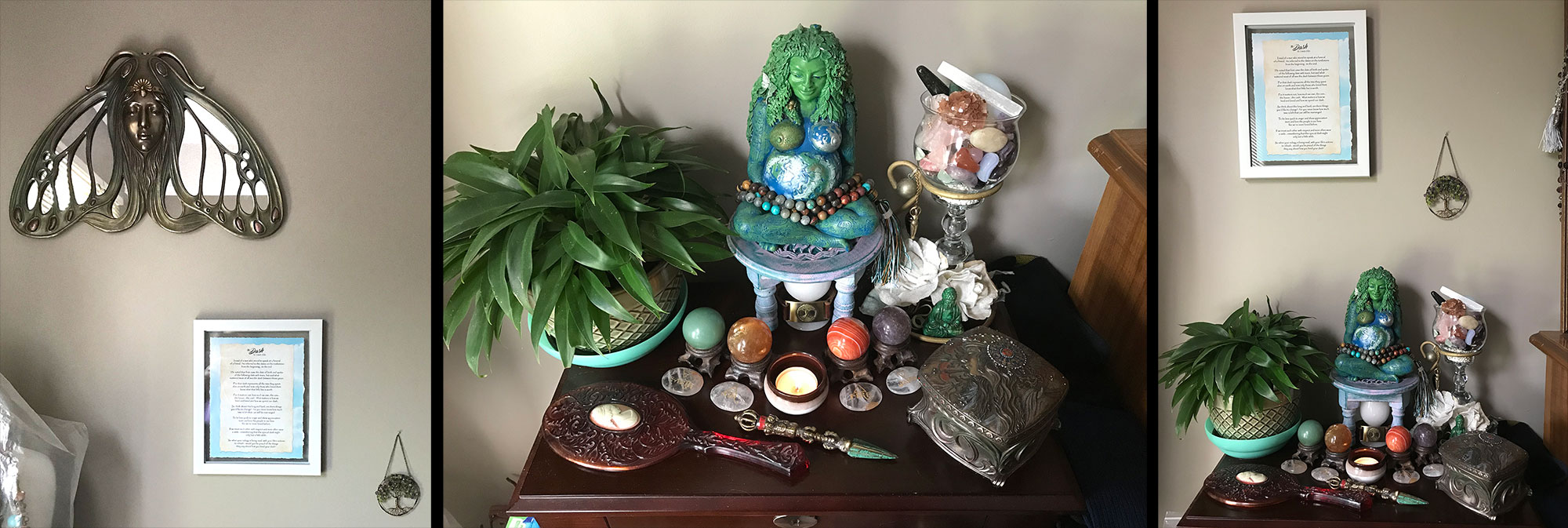
We’ll start with my altar, which is set up in the bedroom.
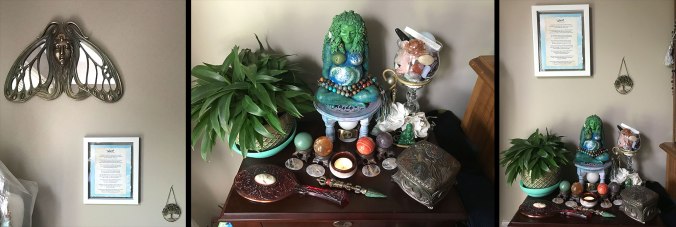
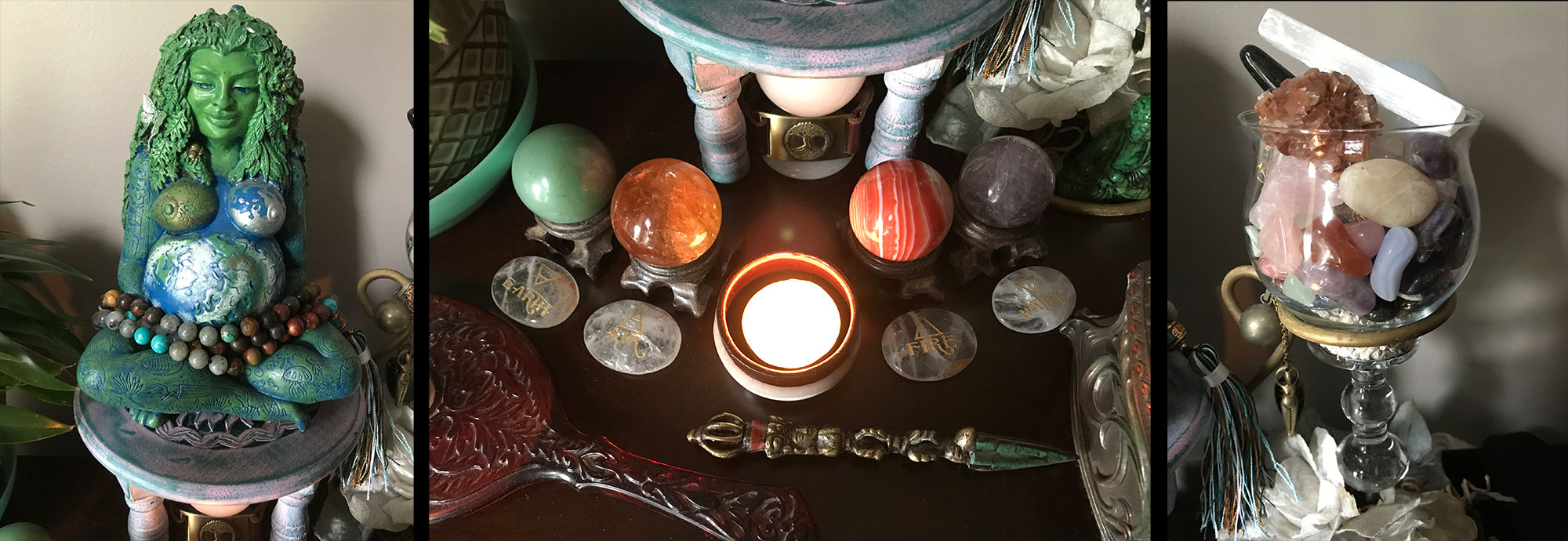
I want to say that the stuff on my altar are self explanatory, but they might not be, so I will go through them starting with the Gaia statue. I do not worship the goddess Gaia, but I use this statue as a representation of the energies of creation, evolution, and balance. Draped over her lap is a mala that has been placed there as an offering to those energies.
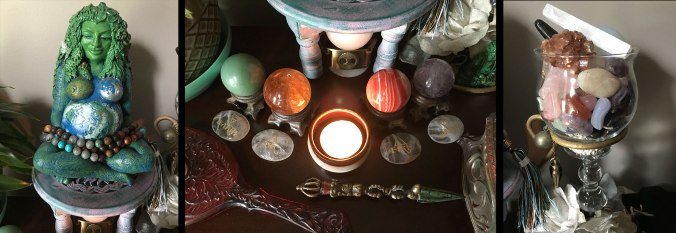
Beneath her is the little altar table you gave me at one point, and beneath that is a small jade offering cup with a tree of life bracelet that you also gifted me at some point. Just forward from there is my altar candle, with four spheres of elemental representations and clear quartz pieces in front of each one.
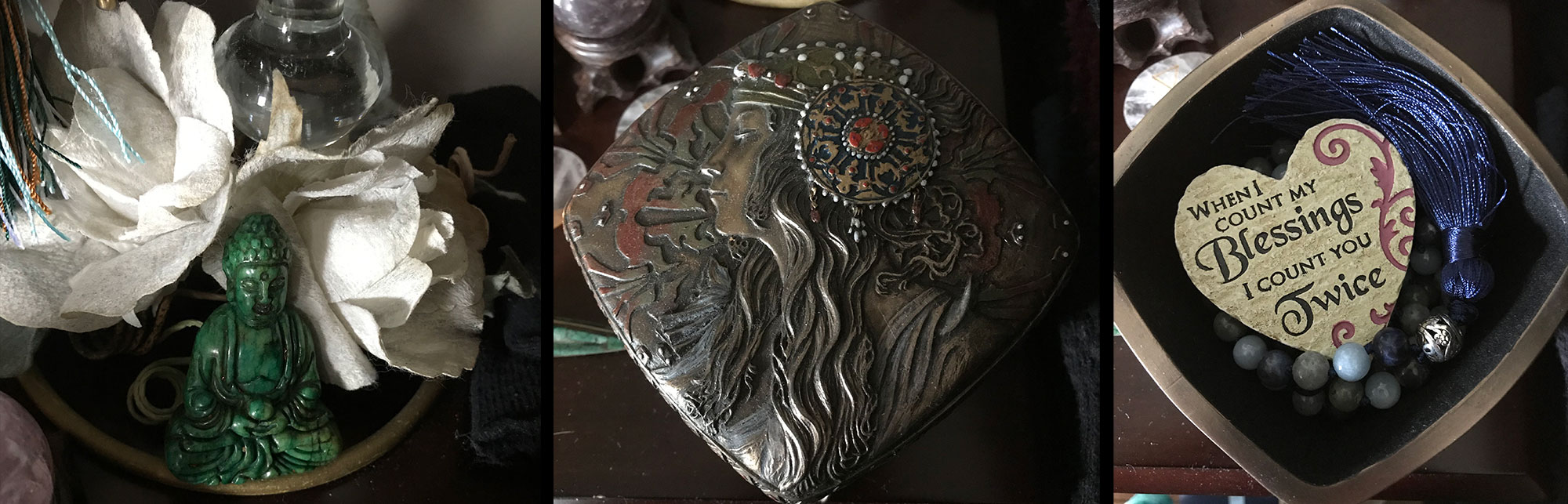
These spheres are amazonite for earth, citrine for air, banded carnelian agate for fire, and amethyst for water. Clockwise from there, in the top right corner there is my suspended goblet filled with lots and lots of different (mostly tumbled) gemstones and gemstone chips. Hanging off the arm of the goblet’s support is the very first pendulum that I’d ever owned, and beneath that at the base where the flower resides is a small dark green jade Buddha.
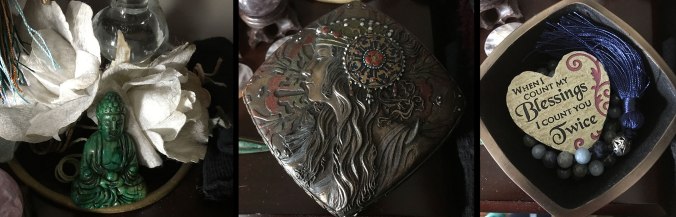
Clockwise from there, in the bottom right corner is an intention box decorated in art nouveau style, which contains a mala made of kyanite and labradorite for connecting to emotion and calm combined, and a small trinket heart for gratitude.
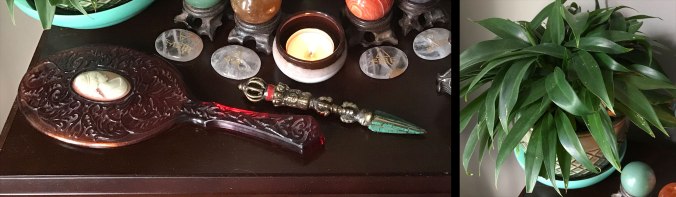
Continuing clockwise from there is my father’s Kila (here’s a link with info on this tool if you’re interested), which is a ceremonial tool that is usually used in Vajrayana Buddhism. I’m not 100% sure if they use it in the traditional version of the path he was on, but HE used it, and I keep it on my altar as a representation of him and his spirit. The mirror beside it is something that my mother has said belonged to our grandmother (Lins has the matching hairbrush somewhere). The hand mirror is a representation of my ancestors. And, of course, the favorite thing on my altar? My beautiful Lil’Phil plant that sits up in the left hand corner.
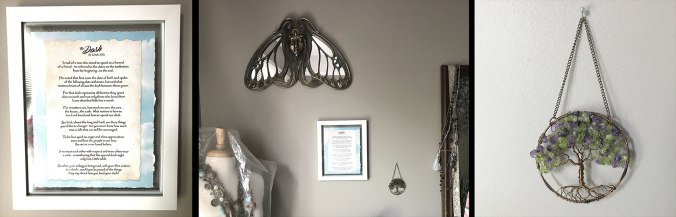
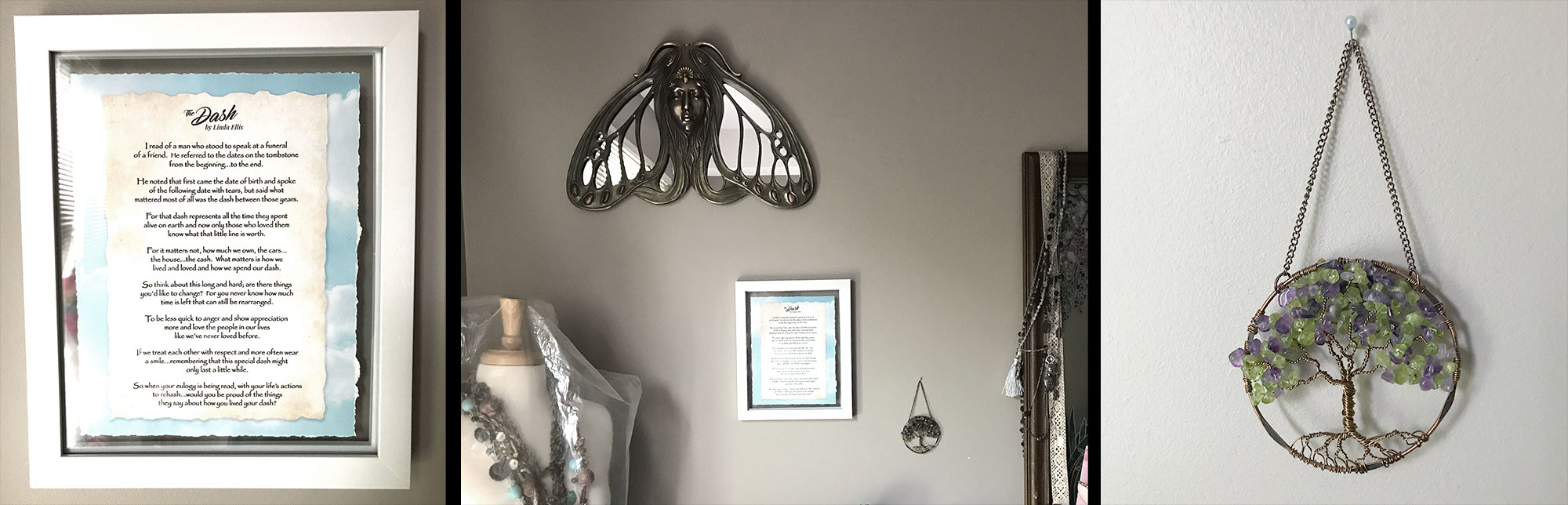
On the wall above my alter is a framed picture of The Dash that I’ve shared before with you, and a small tree of life sun catcher in amethyst and peridot. Above that to the left is a new addition. That is my beautiful moth woman, which I was given recently by Z and matches the intention box on the altar.
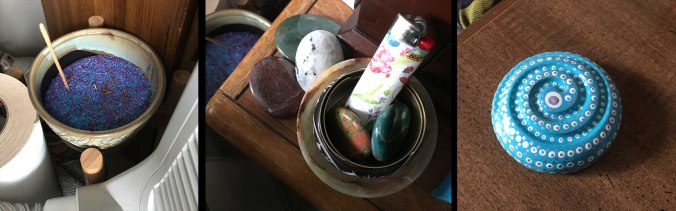
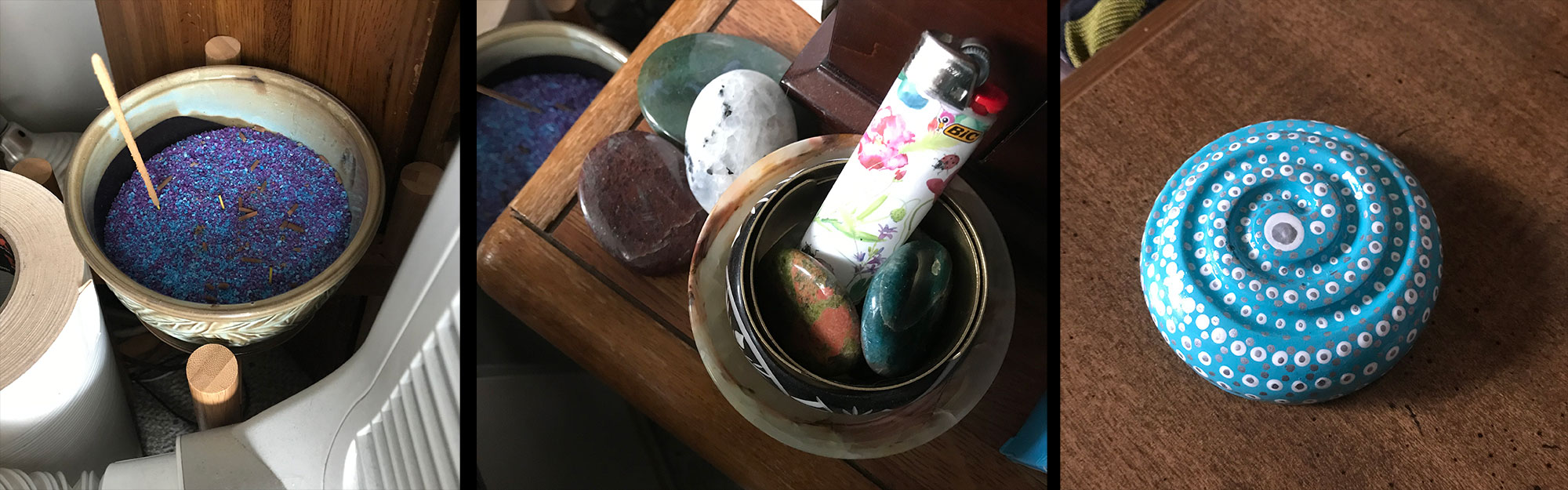
Then, on the shelf below the altar, you can find usually a collection of larger gemstones, my agate offering bowl, a painted rock with spiral design that I found in a post office parking lot, the tarot deck I’m using for my daily pulls, etc. To the left of that on a plant stand is a planter filled with (currently very colorful) sand where my burning incense is safely used.
OK… so that is my main altar. But, I also have a handful of other sacred spaces in my home.
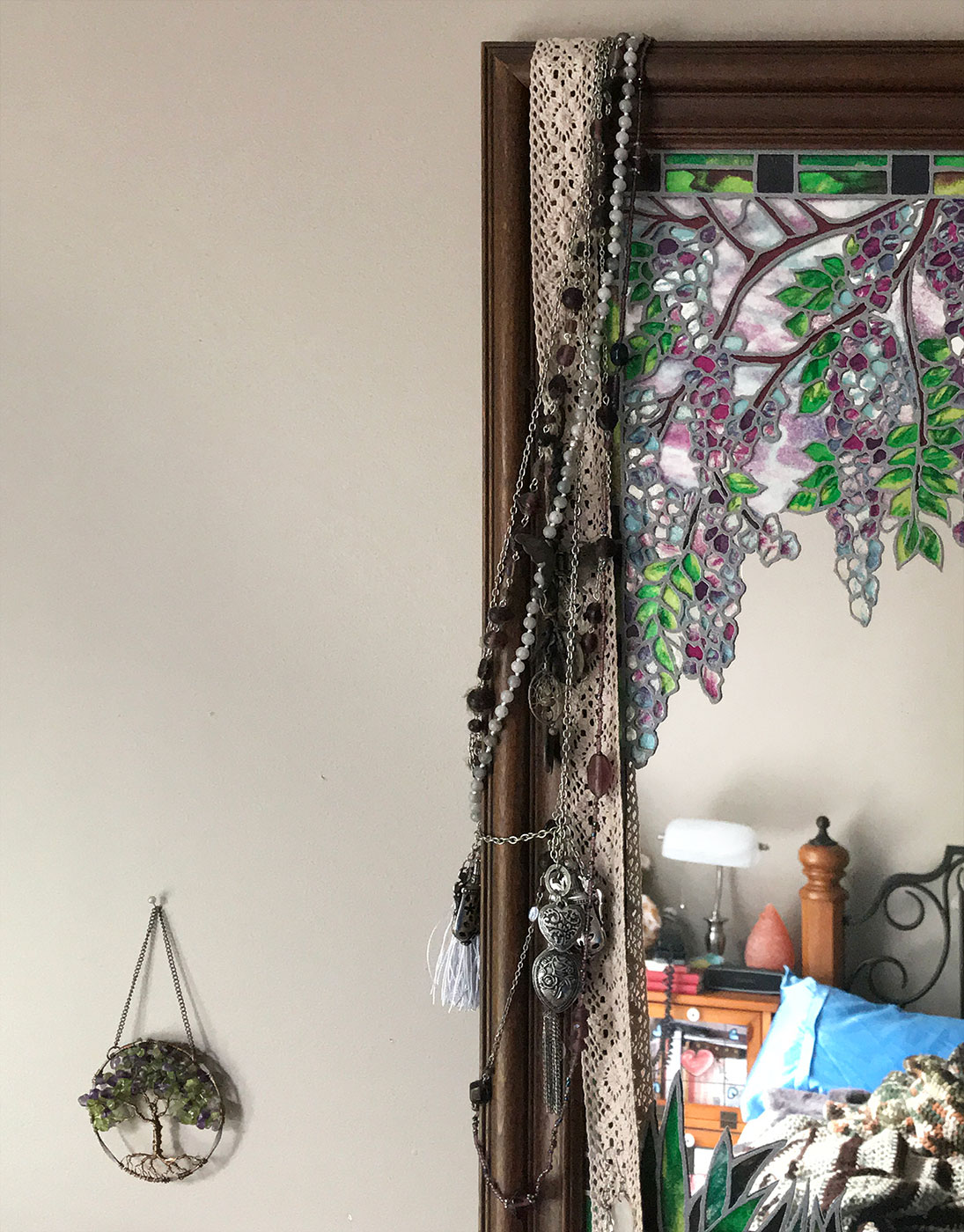
 Beside my altar, I have a large mirror with a bauble trap set up there for mischief makers to busy themselves with (so that they aren’t playing with the stuff on my altar). I’ve added a picture, but I’ve found that I had a hell of a time figuring out how to get it to show the simmer on the baubles, so they look a little dark. You can click the picture to get a better view though.
Also in this picture, you can see my new teardrop shaped salt lamp, which I purchased from a shop near Z’s that was going out of business. It’s located on the far side of the room and is hooked up to a timer that turns it on and off on a schedule, and also allows me to turn it on and off with my phone so that I have a little light in the room when I’m heading to bed (so I don’t trip over Miss Luna’s toys). It’s such a deep pink that when it’s turned on at night it glows red. It also sits in a small dish that you can’t quite see, because salt lamps always run the risk of drawing moisture and I don’t want to drown my Bose speaker sitting there or the books tucked in the book-stand beneath it.
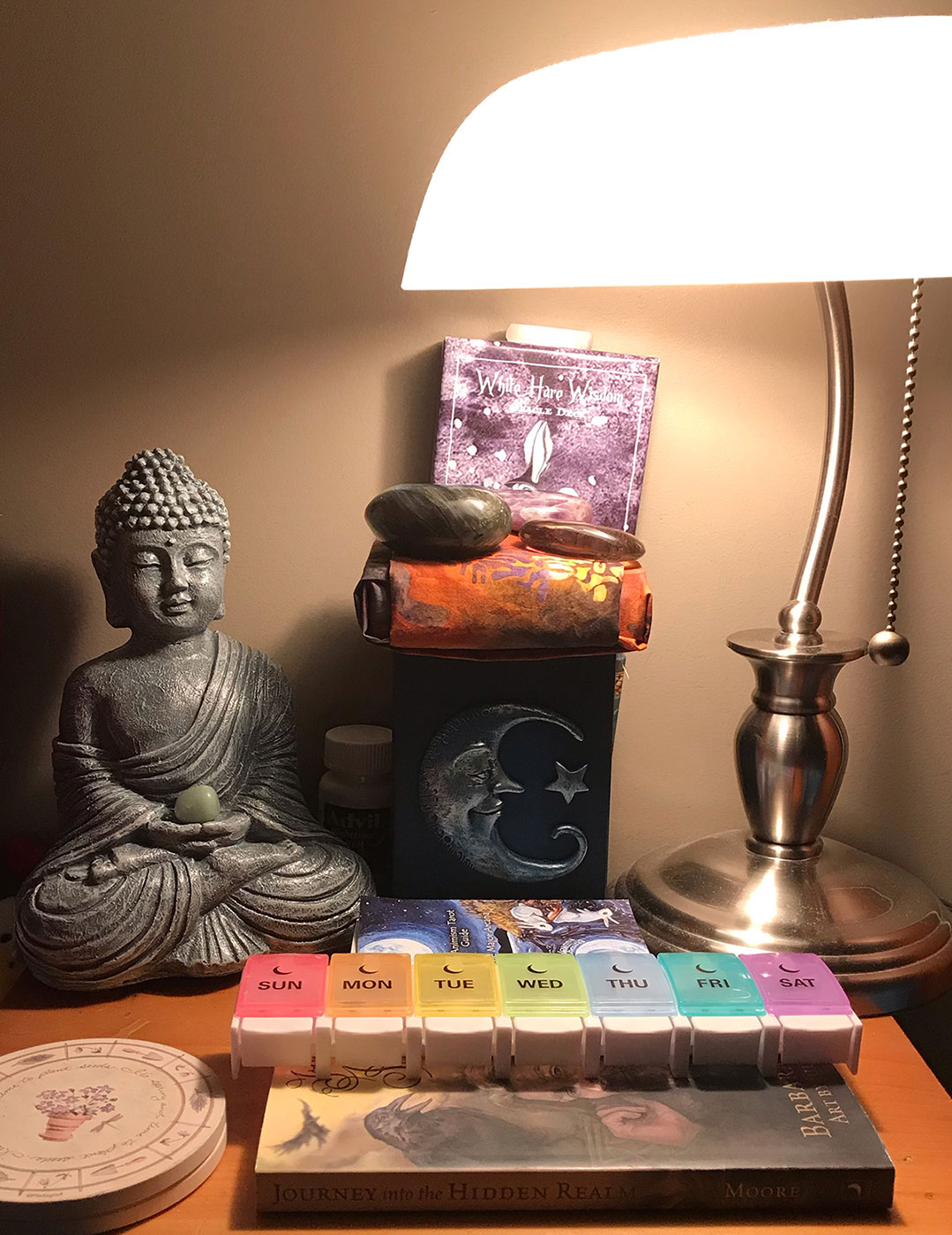
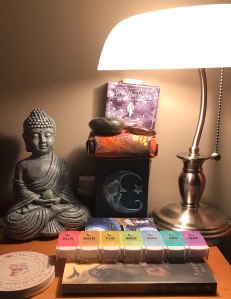 There is also my concrete Buddha (holding a piece of green calcite) on the other nightstand beside the bed, along with a moon box which holds a couple of malas in it, and a stack of a few decks I use monthly.
There are also the stones I use regularly in meditation, which includes a large piece of labradorite and smaller palm stones in amethyst and smoky quartz. My pill box usually sits here as well, along with whatever book(s) I’m reading from just before bed at the time (which at the moment is “I See You, I Am You” by Casey Jo Loos). At the time I took this picture, I was re-reading the Journey Into the Hidden Realm. (Sorry for all the dust in my pics btw. The close ups really show it and I just didn’t feel like dusting before I took the photos.)
That little pill bottle hiding in the back is Advil Nighttime, which I use now and then when I can’t sleep and don’t have to be up early. The coasters on the left usually hold a water bottle that I keep filled in the bedroom.
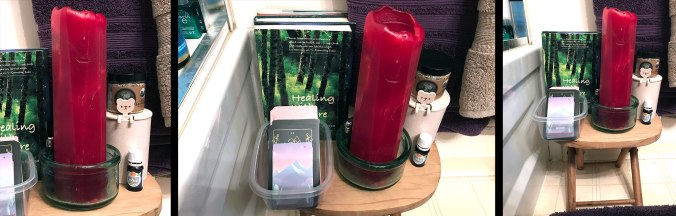
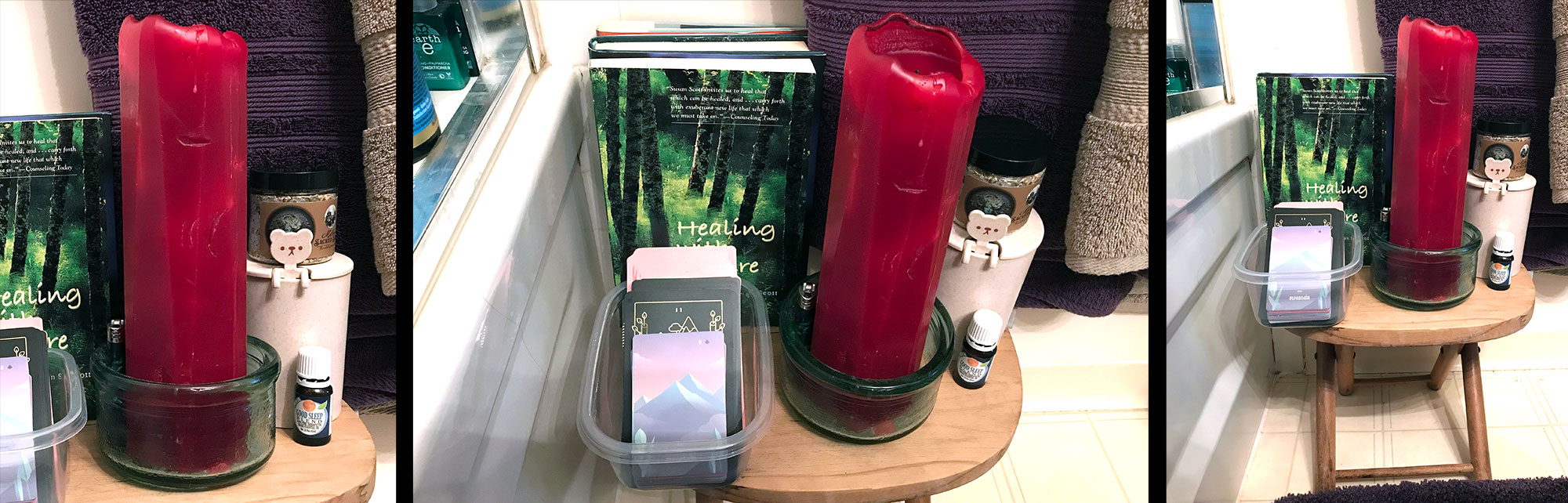
Then there is this little altar beside the bath tub in the bathroom. I spend a good deal of time in my bathtub. Ok, so not THAT much time, but at least an hour and a half each week at the minimum, not counting my daily showering. It’s not just for soaking, but also for first aid (thank you Epson salts) and ritual bathing.
This little space contains a bin that holds two waterproof tarot decks and one waterproof lenormand deck. There is also a large pillar candle (that made myself at Ms B’s house), a wheat-straw teddy bear mug holding a collection of essential oil bottles, and a few books for when I feel like doing a little reading while I marinate in the tub.
Because of allergies, I have to be extremely careful what I put in my baths. For this reason, I don’t use herbals in my bath. What I use most often is a mix of Epson salts, apple cider vinegar (with the mother), and bentonite clay combined with a single drop of one of a few essential oils that I know for sure will not set off my allergies in some way. These supplies are lined up along the wall beside the little stool I show in the pictures.
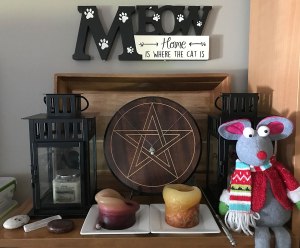 In the living room, I then have a few spots as well.
Here is my shelf where I keep my pentacle tile and my mother’s bell. Lots of candles as well obviously, and you’ll see a handful of things that you have purchased for me over the years.
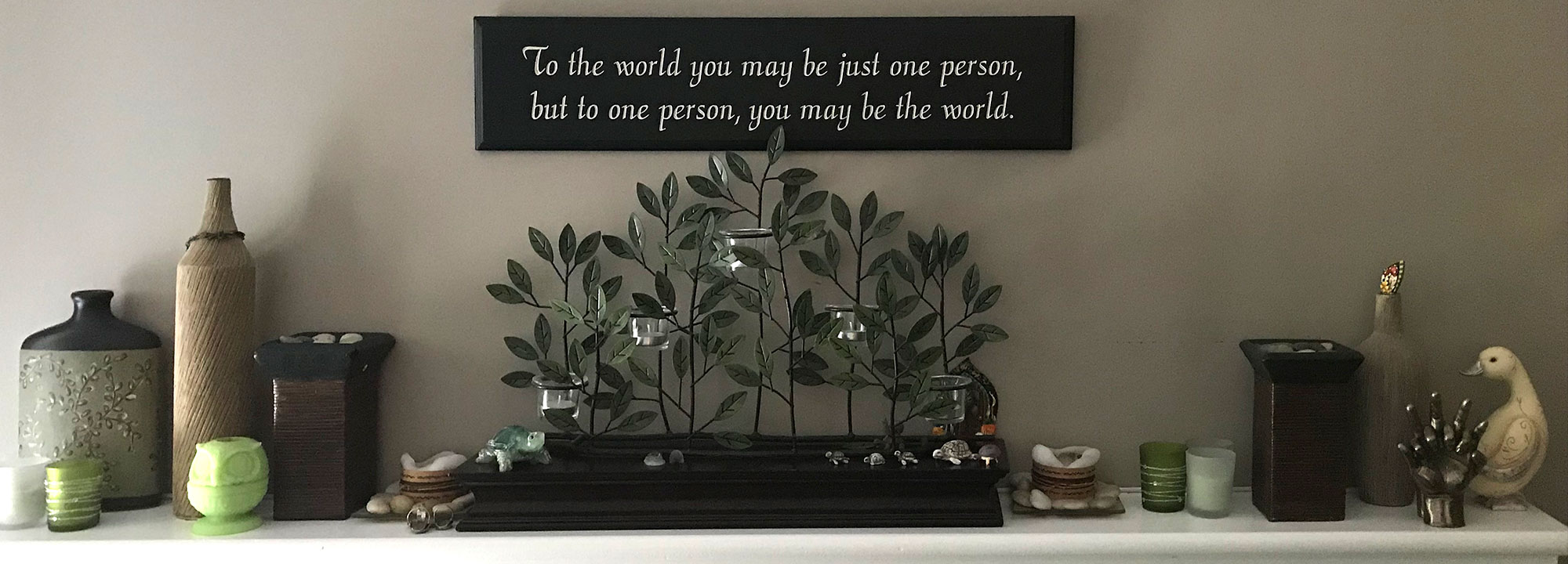
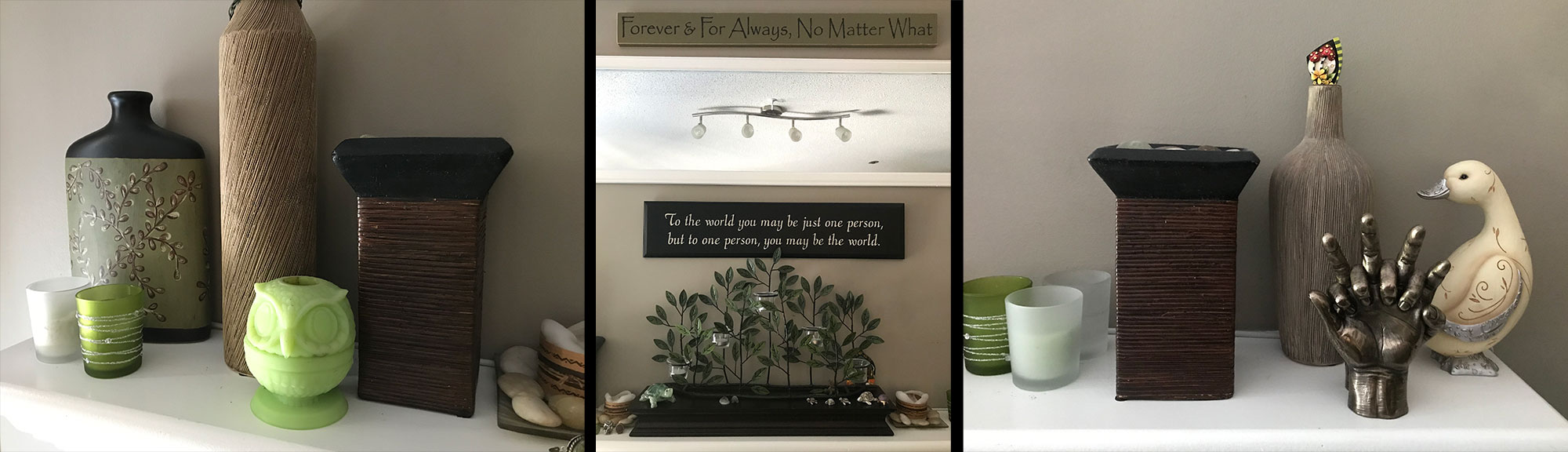
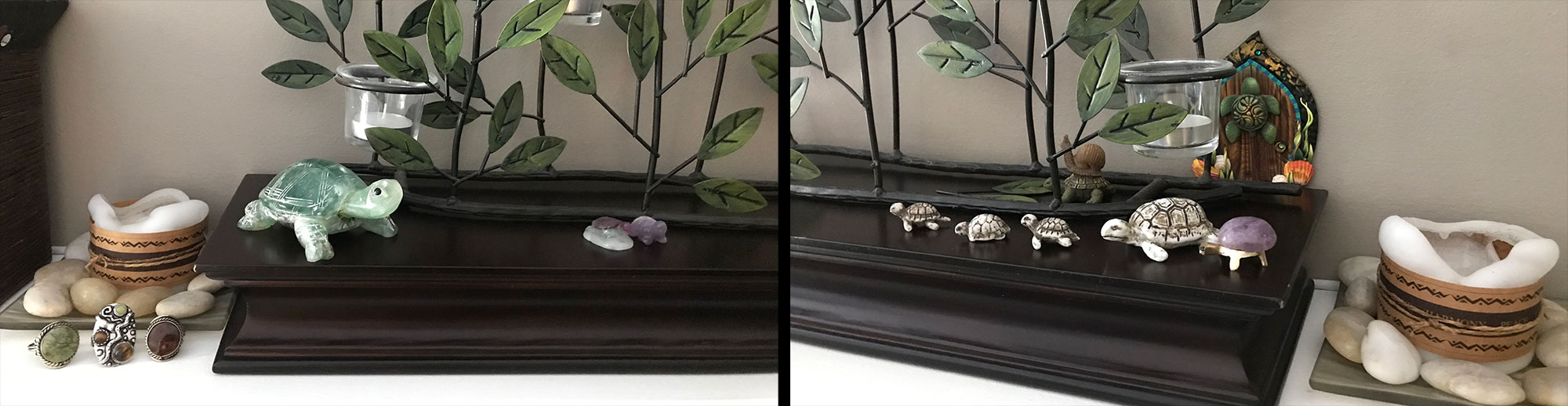
There is the mantle above my fireplace, where I also have a handful of the gifts you have given me over the years, as well as candles and crystals, a fairy door, and a parade of turtles that always remind me of you. There is also my goose, the newest gift you gave me of the holding hands, and a few other small items (including a blown glass turtle pendant that matches the one I sent you hanging from the vase on the left that is for some reason currently facing the wall).
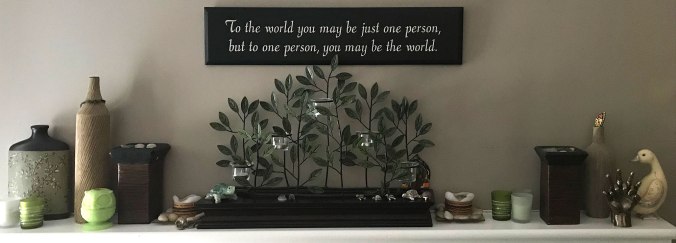


Also on the mantle is an heirloom piece (that you can see in the middle picture above on the left), which is the green Fenton glass owl candle holder that was my mother’s. I’ve been enamored with this candle holder since I was a little kid, and I was seriously -choked- when my mother told me that I could take it home with me recently. It is very cherished.
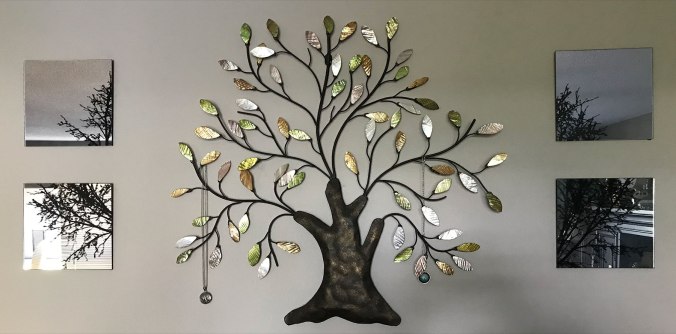
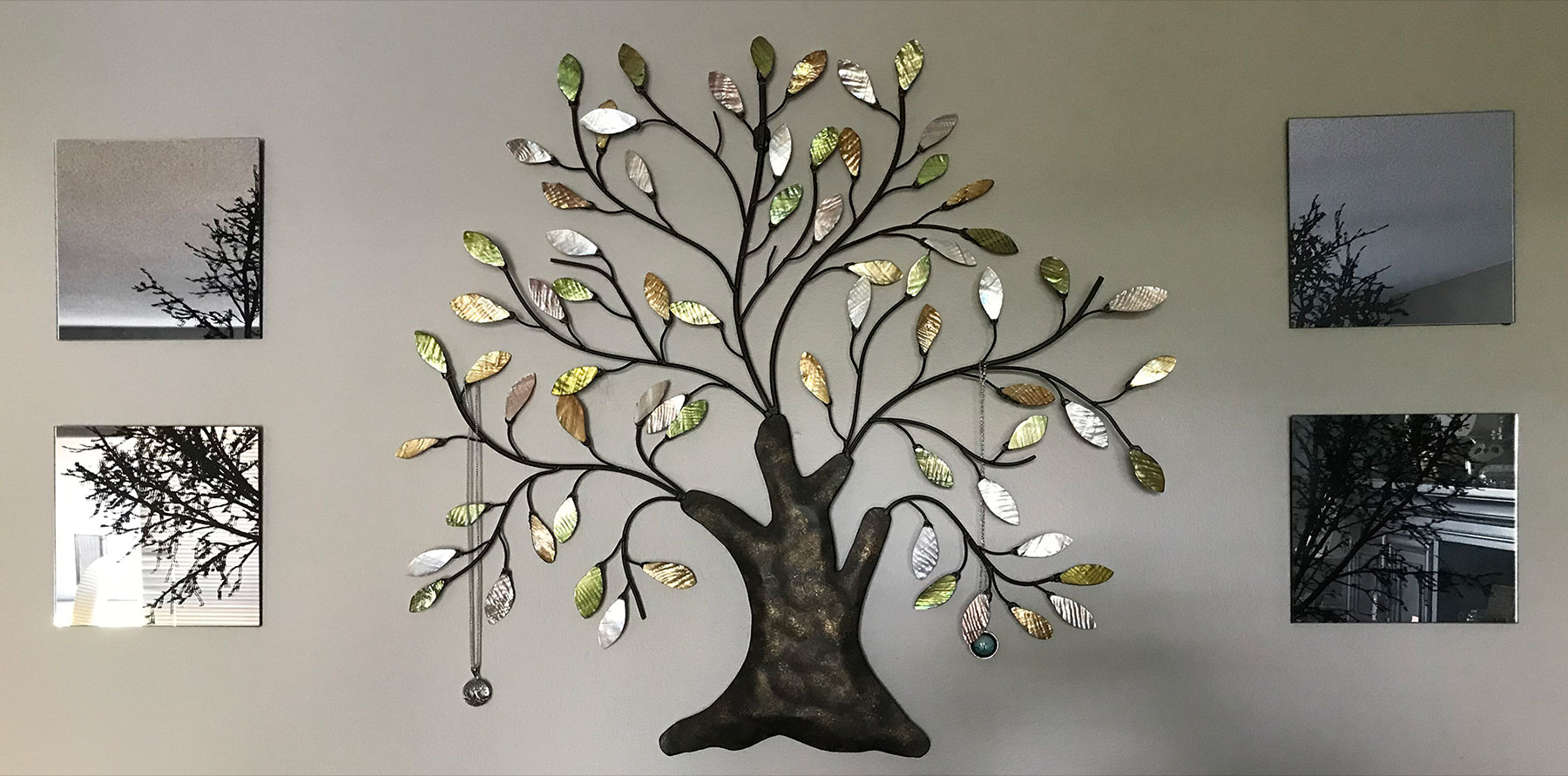
Here you can see our bauble tree, gifted by you, which my sister and I also use to hang things upon (charms, notes on strings, etc) as a way of setting intentions prior to spellcrafting. This tree works spectacularly as a bauble trap as the shell leaves really shimmer and reflect light beautifully, and the tree branch mirrors you gave me go really well as “expanding” the reach of the branches of the central tree in my opinion.
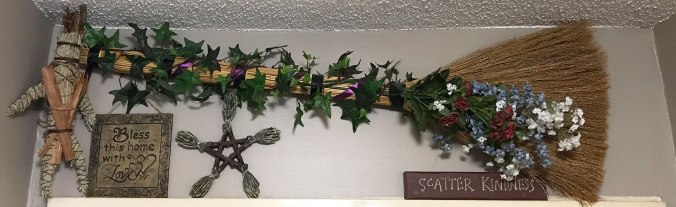
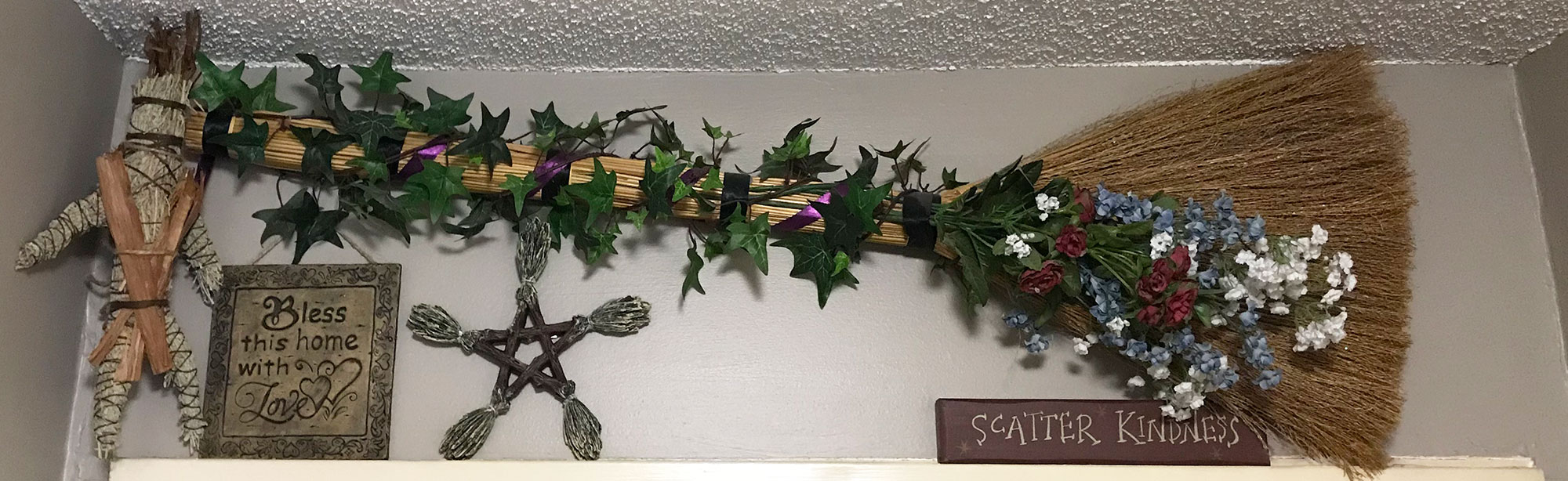
Here is the entry to my home, or rather, what resides above the entry. On the left, you have my sage and cedar poppet for protection and a besom pentagram, both of which came in last month’s Witches Box subscription. The rest of the stuff up there has been there for years and includes broom (besom) that Z made for me when I moved into this space, and two plaques that my sister and I set with intentions each year.
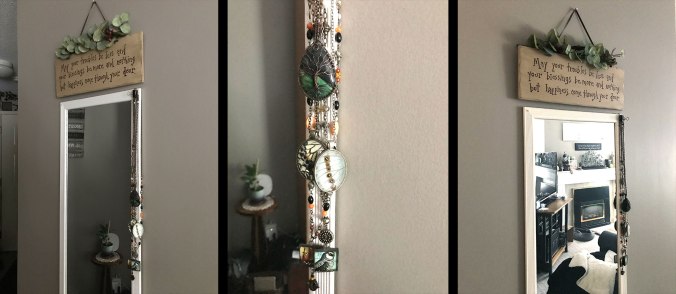
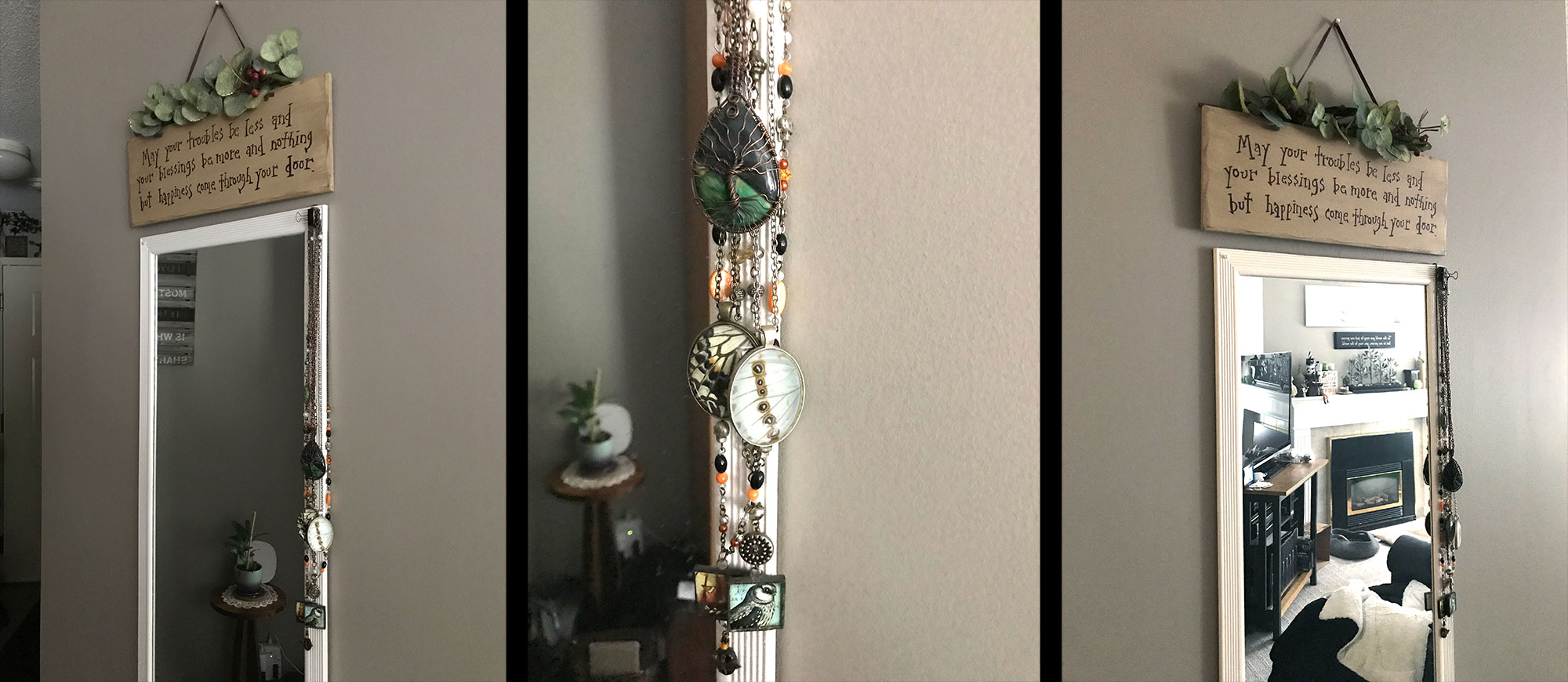
Here is the last of the bauble traps currently in my home, and I’ve mentioned this one on the blog in the past. This is near the front door at the other end of the short entry hall. It is not visible from the front door, but catches light from windows across the room. Like the one in the bedroom, I didn’t manage to get a really good shot of the items reflecting the light due to the time of day I took these photos.
Like the plaques above the front door, the sign above this mirror is imbibed with spellcrafting, which because I am using this as a bauble trap right next to the entrance to my home, I feel is extremely important as my belief is that mirrors can also be a sort of doorway.
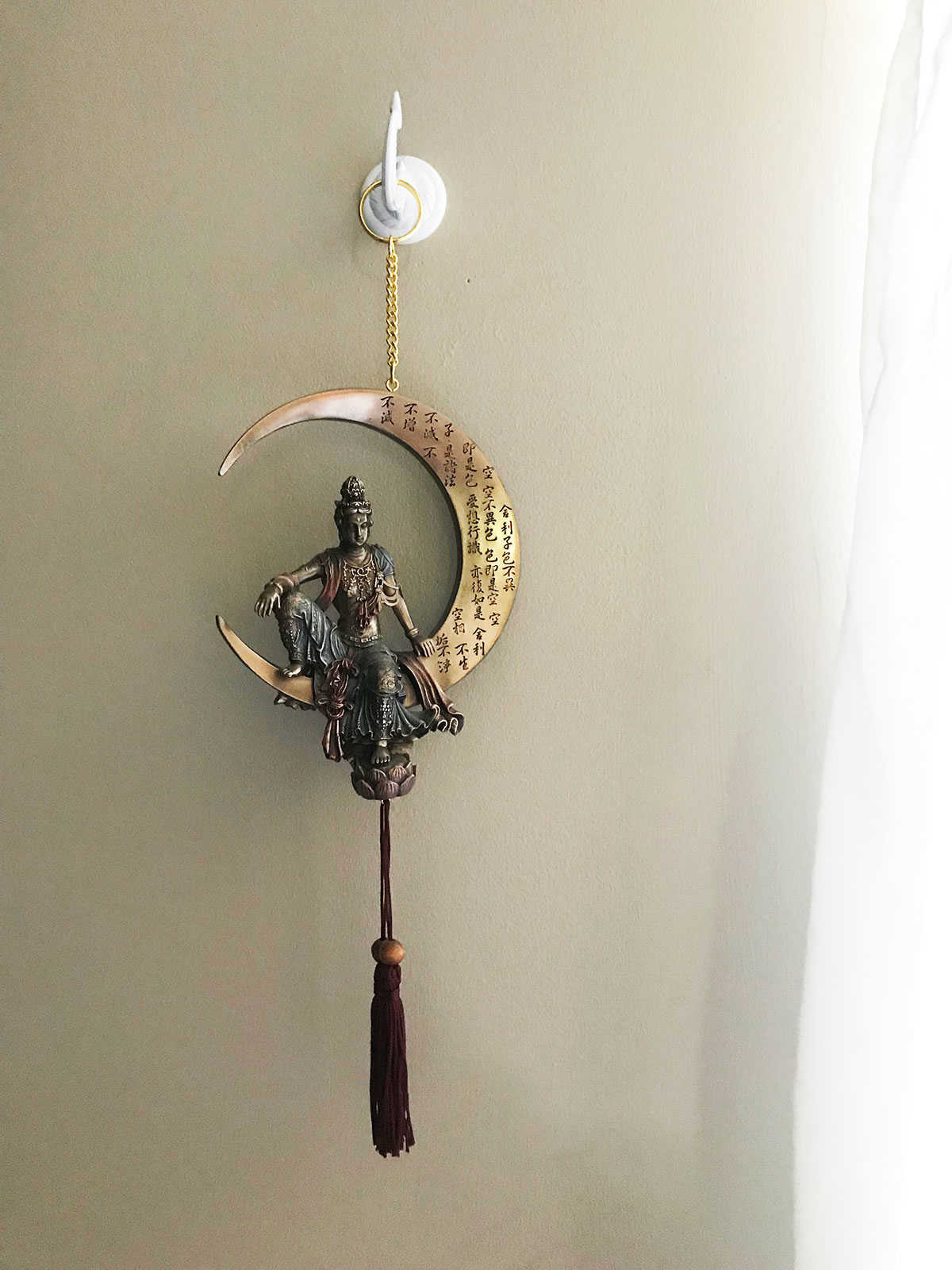
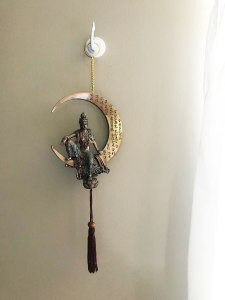 On the other side of the main living area near the sliding glass door, here is my Quan Yin statue.
Quan Yin (aka Guanyin) is the Buddhist goddess of mercy and compassion. In my parents home growing up, we had a number of Quan Yin statues, which holds a certain amount of irony considering my father and his behavior throughout my childhood. BUT, I love Quan Yin. I think she is beautiful.
I don’t worship her as a goddess, but I love everything she represents and everything she is about. Like the Buddha, I bring her into my home not to worship, but because I feel it creates space for the energies that they represent.
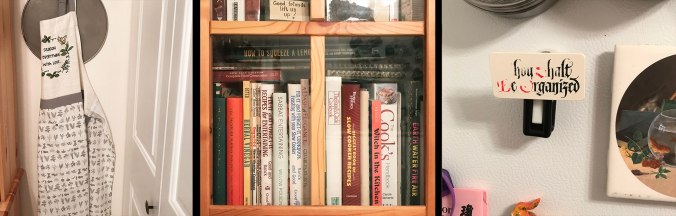
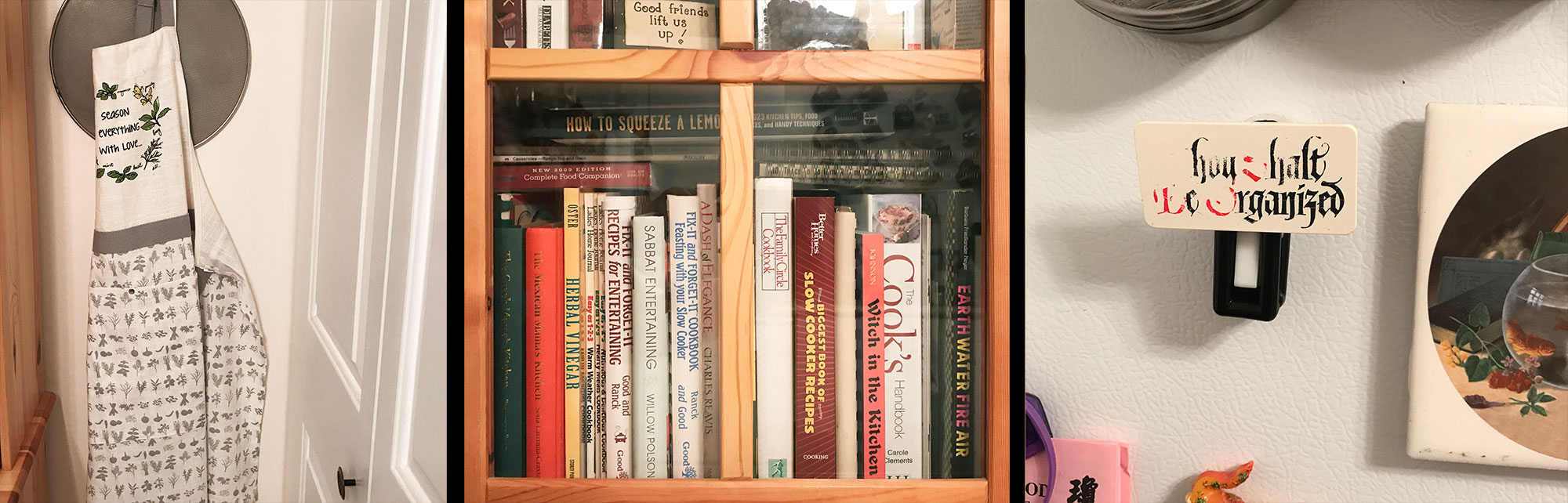
I can’t really say that I have sacred spaces set up in either my kitchen or the office, although I included a few items imbibed with intentions from my kitchen above, as well as a peek of some of my books on my kitchen bookshelf.
I consider the whole of my kitchen a sacred space, as this is where a lot of my spellcrafting takes place, and where much of my intention setting also is done concerning health matters and the like.
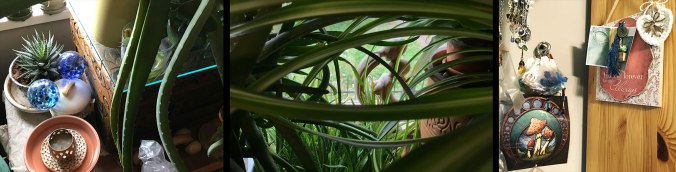
In the office I have a lot of greenery, but nothing that’s particularly sacred aside from the plants themselves. I do have a few things hung on the wall near where I package orders to remind me of my center and assist in keeping me from sinking too deeply into that “work mindset” and losing track of everything else.
As a side note about the kitchen… In many traditions there is a superstition that tools used in worship and spellcraft can never again return to being used for mundane tasks. I personally do not subscribe to this belief. My home is a sacred space, my life aligns with my faith in not just that I do in a daily devotional or occasional rituals, but is sprinkled throughout my life (and home) in all sorts of small ways. It is not something put in a box only to be pulled out for certain things or occasions, but instead is a part of everyday life, and integrated into every nook and cranny.
Because of this integration, though, I’m sure I’ve missed a few of the smaller spots and things that make up the smaller sacred spots. When something is so integrated into your life, sometimes it just becomes so everyday that you no longer manage to pick it out. So I think that’s it!
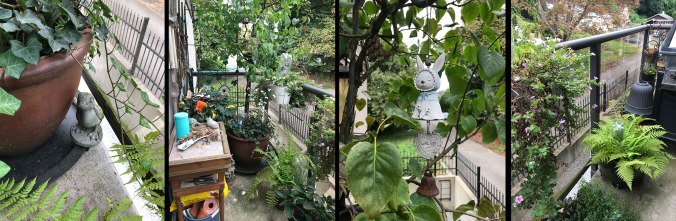
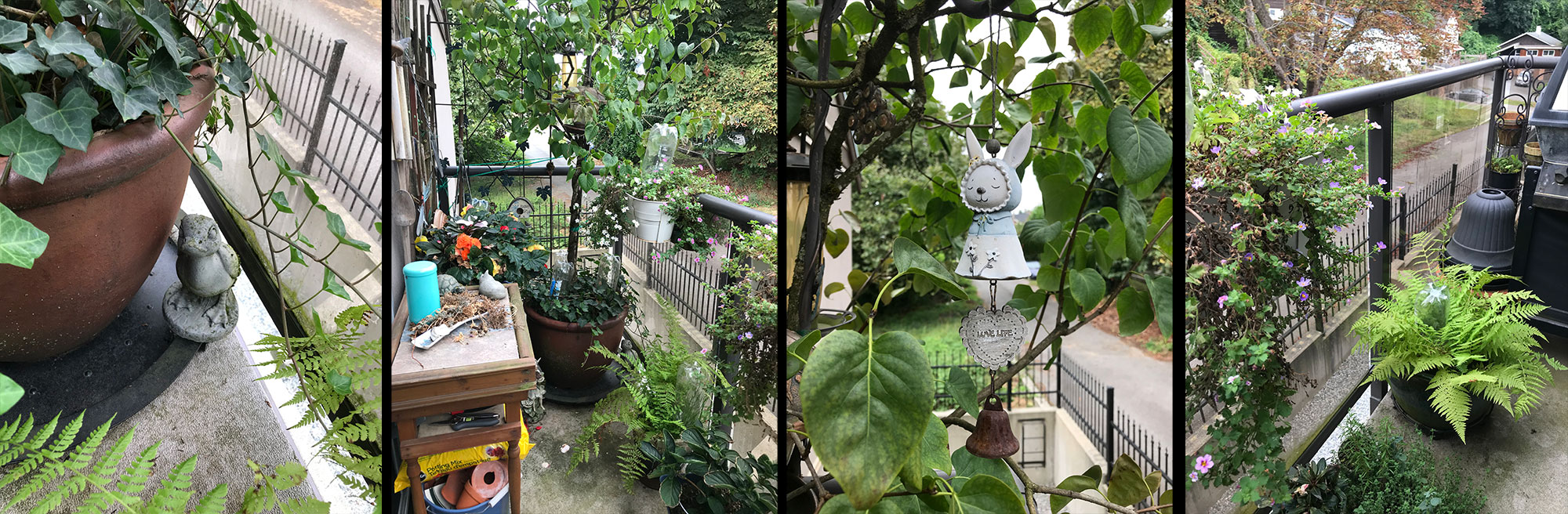
A bonus picture of my balcony because it is where I go to center when I’m upset, or just to feel a little more connected to the earth when I can’t get out to go hiking. Out here is also where I sit to smudge new decks when they come into my collection. I didn’t include a picture of that process, though, cuz I’ve already made a post about it.