Labels and My Spiritual Path


People love to hate labels, and yet… hate to love them too. The debate goes both ways. Labels are lazy, harmful, or limiting in some way… or, labels are a “container” for a set of characteristics with the purpose of effective and clear communication

I fall in the latter category, although I see and understand the other side of the coin. The truth of the matter (at least in my observation) is that whether you hate them or love them, they’re necessary for clear communication.  

I wear a lot of labels, this post specifically is about those in my spiritual practice, though.  In one of the communities I’m a member of on Discord, a question came up asking, “Which terms do you use to talk about yourself and your craft? Why do you prefer those terms?”

Here are my answers:

  • Witch / Witchcraft – It just feels like a term that’s easy enough to communicate without confusion.
  • Pagan – Lots of people in society at large are uncomfortable with the word “witch”, and they find “Pagan” as more palatable with less negative connotations. It also feels like this term connects my witchcraft to my spiritual practice. Not all witches see that path as spiritual, but for me they are very much connected. 
  • Practitioner – Also a more “politically correct” term that makes non-witchy people more comfortable when speaking on the subject.
  • Spellwork / Spellcraft – These are the terms I grew up using when speaking of witchcraft workings.
  • Eclectic – This term fits because although I have a foundation in Wicca, I’ve been pretty much “winging it” in my own personal way for decades. I do a lot of “dabbling” in other types of witchcraft outside the ones listed below that I consider my “home base”, just to see how things work or how it feels. Sometimes these new experiences get adopted into my practice… but usually, even if they’re successful, they are not. 
  • Gray – This one is due to how my ethics work. I don’t have a lot of “set in stone rules”, and instead everything depends upon my gut/moral compass. What’s right one day may be wrong the next due to change in circumstances or other factors, and vice versa. It’s very wishy-washy, and could be viewed differently by different people as a result. 
  • Green / Forest – My practice leans very heavily into revering nature and her cycles, spending time in nature/communing with nature, researching nature, etc. This includes practicing with a wide variety of plant matter in a myriad of ways, as well as stones, crystals, soil, and other such detritus from nature.
  • Hedge – I spend time within, and draw energy from, liminal spaces. Especially liminal spaces among the trees and in forest areas. I feel that for me, this is a “sub-category” of Green/Forest.
  • Cottage / Hearth – I would say that my practice is split between Green / Forest and this category. My home is my sacred space and most everything in it is geared towards my spirituality and practice in some way.  Including things like cleaning, bathing, laundry, etc. I would also classify my jewelry making spellwork under this term. 
  • Kitchen – Ties in the Cottage/Hearth factor with the Green side of things in that one of the ways I commonly use plant matter in spellwork (and practice spellwork as a whole) is through cooking, tea making, baking, etc.
  • Tarot Reader / Cardslinger – It’s what I do. Quite literally with the word “cardslinger” since I pull my cards through jumpers instead of picking off a pile. I do a variety of other divination techniques, but using cards is pretty much “home base” for me. To be fair, I read all kinds of cards other than just tarot regularly. (ie: Lenormand, oracle, playing cards, image only cards, game cards, etc.) But the term “card reader” never seems to be something people understand, so I don’t use it.
  • Fortune Teller – I do predictive readings (usually using cards).
  • Mediumship – In my divination practice (and occasionally outside of my divination practices), I sometimes communicate with the dead.

Because I lean into experimentation, there’s a lot of other terms that could be used to describe my practices, but I feel like none of them really weigh heavily enough in my practice to break out of the “eclectic” container and stand alone on their own.  

It was an interesting exercise to look at my spirituality and practice in this way, and I feel that it helped me in seeing my own path in a more organized light.  I’d definitely encourage others to do a little examining of their own paths and see what they come up with as well. 

Remember, just because a label fits doesn’t mean you’re restricted by it. It’s just a word to help in communicating with others. After all, we don’t call a mug “that cylindrical thing that holds the hot drink made with brown beans”. We call it a mug, even when it holds paperclips instead of coffee.

What is Centering and Grounding?

Although a lot of people look upon the terms “grounding” and “centering” as one in the same, in truth they are two very different things that are often used in conjunction together.

Centering, which is usually done first (although not always), is about drawing in your chaotic energy. Imagine your energy as a sphere that surrounds you. When you are feeling chaotic, distracted, scattered, etc, the particles of energy in this sphere are agitated and disorganized.

In centering, you are taking these particles of your energy and drawing them from the sphere and in closer to yourself, even into yourself. Drawing these energies in, they condense and calm, ceasing their agitation and disorganized behavior. This is called Centering. It is bringing your energy “to center” in order to “piece yourself together” and calm your energy into a state of solid stability.

Grounding is usually done after centering, although some people do them simultaneously (or only do one or another depending on what works for them). Grounding is taking that stability within you and connecting it to “an anchor”. There are lots of things you can use as an anchor, but in my case it is always very literally… the ground.

Grounding helps preserve the centering that has been done, giving the stability found in the centering a more solid and long-lasting quality. It can also be used to help release excess energy that can build up when one is dealing with things like nervousness or anxiety, or otherwise balance out one’s energies.

My go-to way of grounding is through rooting. This is when you allow yourself to connect through your feet (or other part of your body touching the ground) and imagine your energy creating roots that dig down into the earth and spread beneath you. These energy roots create an anchor that helps cement stability in place, and allows a give-and-take of energy with the earth to level out any excess or depletion taking place.

I center and ground many, many times a day. It is a habit that takes a few second at a time, or can take a few minutes if done consciously and with intention for a stronger effect.

In spellcraft, these techniques are especially important as they are used to help condense and prepare your energy for use and direction. Casting a spell without centering and grounding would be like shooting an arrow out of a bow with the feathers loose. The energy (arrow) may get where its going, but it sheds a good deal of energy along the way (the feathers) making the spell less effective,

By centering and grounding first, you are essentially securing those feathers to the arrow (creating fletching) so that when the arrow flies, there is no loss of energy along the way and the arrow’s accuracy is greatly increased. Thus, your intention and energy in the spell is not wasted and flies true as well.

This is why you will find in the large majority of witchcrafting communities, when people ask why a spell didn’t work or why it went awry, the first question usually posed by those with experience is “Did you center and ground first?”

Music to Craft By

Today’s question is brought to you by two of the witchy type servers that I’m a member of on Discord. Both servers asked the exact same question within a few days of each other and I thought it might make for a good topic here.

Prompt from Server #1: “What song(s) put you in a witchy mood?”
Prompt from Server #2: “What kind of music do you like to listen to when you work magic?

Okay, so I love music. I really do. But, there are a number of activities that I can’t do while listening to music. Because I have sound → sensation/smell/taste synesthesia, music can often have unintended distractionary repercussions, so I have to be careful to what I listen to and when. For example, I have a playlist of music I can listen to while driving because none of the songs cause me physical sensations that would distract me from what I’m doing. I couldn’t guarantee that if I were listening to the radio, where a song or sound might come up that could create a painful pinch in my hand or arm, or a pins and needles sensation in my foot or leg.

For this reason, most of the time when doing spellcraft and different spiritual workings, I don’t use music as it can create “phantom sensations” that can be distracting. That said, I do have a playlist full of certain songs that safely “fit the mood” that I will use when I want to include music. Some of those include…

Terra Firma by Delerium


Silence by Delerium


Dissolved Girl by Massive Attack


Black Milk by Massive Attack


All Mine by Portishead


To Be Free by Emiliana Torrini

Not all of these (or all of those on the playlist) are sensation-free sound. But none of them create unpleasant sensations, smells, or tastes that might distract me from my focus. And, of course, all have the same “vibe” to the music that helps “set the mood” that I like for spellcraft and witchy-type activities. I think that for a lot of people, music can really add another level of depth to their practice, and even another element of “flavor” to the magic itself.

#31DaysofWitchcraft Prompt 18 (non)VR to Heather Carter

Heather Carter on YouTube put together a series of prompts titled #31DaysofWitchcraft that she’s been working her way through since the beginning of May. I really like this idea, but I can’t handle the responsibility of any more daily posts, so I thought that for the next little while I would do one (or a few at a time) for the end of week “My Pagan Perspective” posts and work through them a bit at a time.

Herbs03

18. Do you use herbs and/or crystals in your personal practice? Is so, which are your favourites? And why?

I already wrote about the most commonly used crystals in my practice, so I figured that I would use this prompt to now focus on the most commonly used herbs and plants in my practice.

I would like to focus first on the why part of this question, though.  I use herbs and plants in my practice in much the same way I use crystals. To enhance my intentions, enhance the energies I’m working with, or guide those energies to strengthen their purpose.

Spellwork is like any task.  Say you want to hammer in a nail.   You can use a rock…. or you can use a hammer.  Both will work, but the hammer will be much more efficient and much easier to use.  In this analogy, the nail is spellwork… and the hammer is the crystals and herbs used in that spellwork.

Here is my “short list” of the “herbs” I use on a regular basis in my path and practice. Not an exhaustive list, but my go-to herbs most of the time.  I have included what I most often use these herbs and plants for, but keep in mind this is my personal most common uses for each plant and in no way is anywhere near the full scope of that plant’s uses in in spellwork and ritual.

Herbs01

The following herbs and plants are those most commonly used in my practice as a whole (and are non-edible either because of toxicity or personal allergies)

Alder – Strength, Protection, Self Confidence, Bravery
Aloe – Peaceful Energy, Soothing, Home Protection, Luck, Lunar Magic, Silencing Rumors
Birch – Energies of Potential and Renewal, Psychic Protection, Purification
Buttercups – Reminiscence, Self Worth, Innocence, Self Love, Inner Child Work
Cascara – Releasing Spiritual or Emotional Constipation, Money Spells, Legal Matters
Cedar – Perseverance, Fortitude, Protection, Cleansing Negative Energy, Warding
Columbine – Love Magic, Life Path Work, Inner Truth Work
Douglas fir – Healing Magic, Ancestral Work, Grounding, Grounded Progress
Fern & Fiddle-heads (various) – Protection, Invisibility, Good Fortune, Exorcising Evil Spirits
Fireweed – Easing Anger, Restoration, New Beginnings, Breaking Up Spiritual Blocks
Foxglove – Protection, Love and Sex, Fertility, Psychic Warfare
Hemlock (various) – Fostering Sexual Impotence, Purification Rituals, Protection During Astral Travel
Hoya – Wealth, Protection, Inward Exploration, Future Sight
Ivy (various) – Self-Love, Cleansing Negative Energies, Abundance
Juniper – Clear Sight, Warmth, Hope, Love and Sex
Maple – Spiritual Healing, Intellectual Pursuits, Bindings, Abundance, Communication
Marigold – Healing Depression, Cleansing, Good Health Spells
Nasturtium – Encouraging Tolerance, Creativity, Independence, Free Thought
Oak – Longevity and Immortality, Wisdom, Personal Power, Protection, Doorways
Peace Lily – Harmony, Comfort, Platonic Love
Pine – Wisdom, Longevity, Healing, Protection, Purification, Banishings
Poison Ivy – Protection, Defense, Repellent Magic
Rhododendron – Intellectual Pursuits, Sussing Out Enemies
Slippery Elm – Silencing Rumors and Lies
Spruce – Resilience, Rebound Defense Spells, Spirit Communication
Stinging Nettles – Uncrossing, Dispelling Negative Energy, Purification, Willpower
Sweetgrass – Attracting Positive Energy, Purification, Cleansing Out Negativity, Spiritual Healing
Tansy – Longevity, Intention Setting, Invisibility, Curse Protection, Safe Travels
Thistle – Protection, Ancestor Magic, Boldness, Self Growth, Uncrossing
Various mosses, lichens, and liverworts – Attentive Understanding, Clarity, Abundance, Harmony

Herbs02

Also, as a lot of my practice is focused on and included in food, here is a go-to list of the herbs and plants that I commonly use in my general practice as well as my kitchen witchery.

Basil – Peace, Happiness, Protection, Prosperity
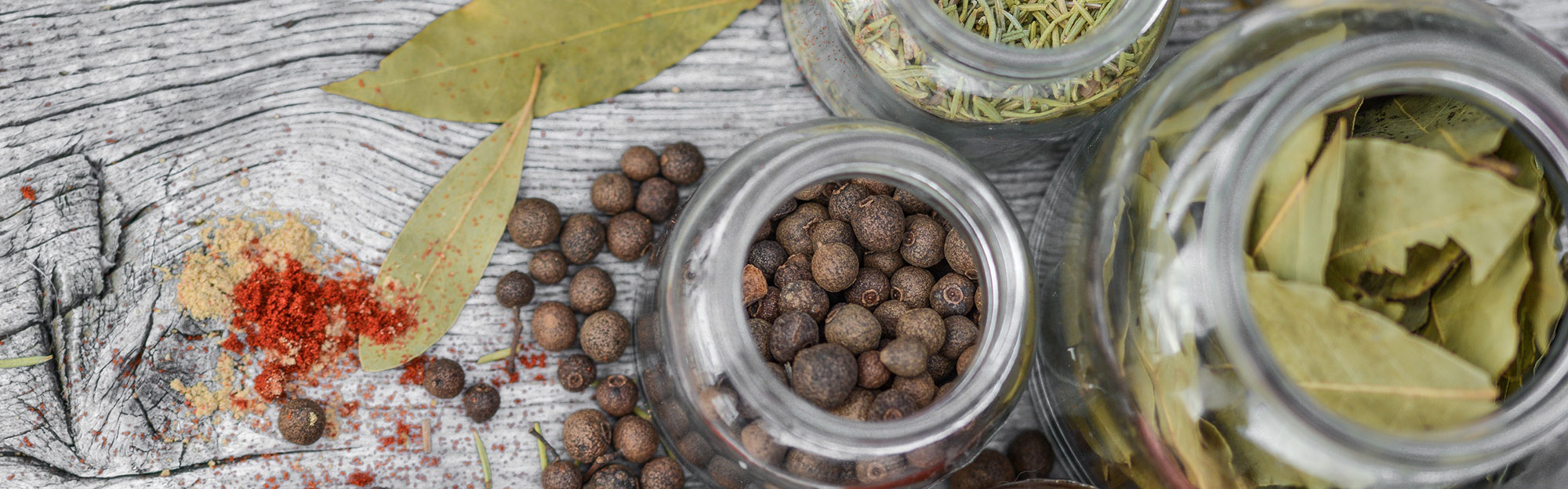
Bay – Uncrossing, Employment, Protection, Prosperity, Psychic Boost
Blackberry – Protection, Prosperity, Healing
Chamomile – Healing, Gentle Energy, Harmony, Breaking Curses, Unraveling Unfamiliar Spells
Chili Pepper – Uncrossing, Banishing, Love, Protection
Cinnamon – Energy Boosting, Intention Boosting, Abundance, Prosperity
Cloves – Silencing Rumors and Lies
Dandelion – Healing, Divination Boost, Protection, Encouraging Smooth Cycles
Garden Sage – Protection, Purification, Healing, Cleansing, Luck, Wisdom
Garlic – Healing, Luck, Dispel Negative Energy, Thief Warding, Repel Harmful Spirits
Ginger – Protection, Sex Magic, Prosperity
Lavender – Cleansing, Clarity, Relaxation, Healing Relationships, Releasing Negative Emotion
Lilac – Energy Boost, Balance, Romance, Metaphysical Doorways
Mint – Resolving Misunderstandings, Prosperity, Lessen Accident Proneness
Mugwort – Dreams, Psychic Boost, Protection, Purification
Orange Peel – Prosperity, Success, Positivity
Oregano – Comforting Warmth, Protection, Purification, Vitality, Peace
Pansy – Gentle Energy, Love, Kindness, Self Love, Bright Ideas, Happiness
Raspberry – Protection, Love, Kindness, Youthfulness, Creativity
Rose (incl hips) – Health, Love, Anticipation of Love, Abundance, Emotional Healing, Secrecy
Rosemary – Warding, Purification, Protection, Psychic Cleansing, Repels Negative Energy
Shepherd’s Purse – Healing, Protection, Healing, Renewal Magic
Thyme – Loyalty, Luck, and Dispelling of Grief, Nightmares, Depression, and Negativity

As mentioned previously, these are far from the only herbs and plants that I use in my practice, but they are the ones that I use most often. Nor have I listed all of the possible uses for each plant, just the what I most commonly use them for.

Herbs and plants have a wide variety of different uses to boost spellwork, divination, intention setting, and other purposes.  I use plants and herbs, as well as crystals, daily in a variety of different ways.

I think it’s important to stress, though, that I have training as a botanist that allows me to handle a lot of dangerous plants much more safely than the average person, and that there are a handful of dangerous and even deadly plants on the list shared above that I do not recommend being used by those without the training and knowledge to do so safely.  Without the proper training and care, one could very easily end up not just hurting themselves, but possibly killing themselves, a loved one, or a beloved pet by accident.  It’s always important to research plants used in any magical working thoroughly before jumping in with both feet.

#31DaysofWitchcraft Prompt 12 & 13 (non)VR to Heather Carter

Heather Carter on YouTube put together a series of prompts titled #31DaysofWitchcraft that she’s been working her way through since the beginning of May. I really like this idea, but I can’t handle the responsibility of any more daily posts, so I thought that for the next few weeks, I would do one (or a few at a time) for the end of week “My Pagan Perspective” posts and work through them a bit at a time.

spellbook

12. Do you have a separate witchy name? Why, or why not?

My “witchy name” is the same as my online name.  It’s Twist the Leaf.

This name comes from a line in a ritual that my sister and I wrote together as children.

To be fair, when I first came online, I used just “Twist” and then “Twist the Leaf” for circles and pagan events and activities.  But over the years, the two have melded and I now use Twist the Leaf in most places, and “Twist” as the shortened version here and there.

As for why.  My mother used to take my sister and I to a lot of Wiccan functions, and having a “witchy name” was all the rage in those circles.  I chose my “witchy name” initially in order to finally get them to stop pestering me about choosing one, but over time it’s become… more than that.

I no longer go to those events and haven’t for… at least fifteen years or more. Other than my sister (and our mentor recently as she’s been living with us for a bit now), my practice is primarily solitary.  But the name has stuck, and these days it seems that I’m actually more comfortable being called Twist than I am called by my birth name.

13. Do you write your own spells, use pre-written one or do a mix of both?

I write my own spellwork, or at times work on it together with my sister.

This falls back on the way we were raised. To be honest?  I don’t spend a lot of time reading pagan/wiccan/witchcraft books.  This isn’t how I learned my craft.  Because of this? Although I knew that published books had spells in them, I didn’t realize these were actually spells people used.  Like, letter for letter and word for word, used like a recipe to bake pastry.  This realization that people actually do that was baffling to me.

My sister and I were taught to write our own rituals and our own spellwork.  We were taught that it is a part of the process of casting a spell to do the work behind the spell, which includes doing the research to know what elements to include in the spellwork, and constructing the spell and wordwork ourselves.   I guess that because of this, I assumed that the spellwork in published books was there as a “jumping off point”?  You know, providing ideas and examples… but not there to be used as-is.

Systems of Correspondences

Today’s prompt is brought to you by one of the Discord servers that I am a member of.  Just as a side note… the reason I do not link these Discord servers is because each server has their own rules about if you’re allowed to share them publicly and how, and it’s a pain in the ass to look it up for each one so I just don’t share them.

On to the question… “What systems of correspondences do you tend to work with most? How do they play a part in your practice? (Ie: the cardinal directions, elements, magickal herbs, etc)

correspondances

The Elements – These are essentially the touchstones of my craft.  I do not have five points when I create a circle.  I have four.  This is because the representative for “spirit” resides inside the circle, not at one of the outer edges.  I (not surprisingly) connect most strongly to the element earth, with water following close behind.  Then air… and lastly fire, which is an element I’ve never had a very close affinity with.   The elements in spellcraft and my path align up with the same correspondences that you see for the elements in the tarot.  That is to say….

Fire (Wands) represents the inner spark of passion, willpower, and drive.
Water (Cups) represents the emotions, relationships, creativity, and intuition.
Air (Swords) represents the mind, intellect, and communication
Earth (Pentacles) represents the physical realm including health, resources, finances, etc.

Spirit/Divinity – As previously mentioned, for me spirit/divinity is not a point upon the circle’s perimeter (not that I cast circles all that often), but resides at the center of that circle. Spirit/Divinity (in my practice), is defined as the energies of creation, evolution, and balance.  Because of its distinction as being separate from “The Elements”, I gave it its own section in these correspondences.

Plants of All Kinds – I’ve always been very connected with plants and rich, moist soil. I have two green thumbs and eight green fingers, and I love plants of all kinds so much so that my university education was focused in the areas of botany and horticulture.  It is no surprise, then, that plants and soil would be something that I incorporate strongly into my spellcraft and practice both through their spiritual symbology, practical uses, medicinal uses, and otherwise.

Lunar Cycles – I depend on the cycles of the moon to lend energy to both my spellcraft and my gardening.  You can learn more about that latter part here:  Farmer’s Almanac – Why Garden By The Moon

Seasonal Cycles – My wheel of the year is built around seasonal cycles (as opposed to the god/goddess journey or whatnot).  My celebrations align with the solstices, equinoxes, and cross quarter points lined out by seasonal changes. Which, I suppose, means it could also be said that I work with weather cycles as well.

Stones and Minerals (esp. semiprecious stones and precious stones) – I’m a jeweler.  I make amulets and pendulums and other magically enhanced items.  It would be weird to me to do this without using the appropriate stones in the process.

Colors – This one is more rare, but there are magical correspondences that have to do with colors, especially when using candle magic, thread and knotting magic, etc.  I do occasionally incorporate this into my spellcraft, but not all that often.

I’m sure there are plenty more that I’ve not included, but this is a list of some of those I use most often.