What is Centering and Grounding?

Although a lot of people look upon the terms “grounding” and “centering” as one in the same, in truth they are two very different things that are often used in conjunction together.

Centering, which is usually done first (although not always), is about drawing in your chaotic energy. Imagine your energy as a sphere that surrounds you. When you are feeling chaotic, distracted, scattered, etc, the particles of energy in this sphere are agitated and disorganized.

In centering, you are taking these particles of your energy and drawing them from the sphere and in closer to yourself, even into yourself. Drawing these energies in, they condense and calm, ceasing their agitation and disorganized behavior. This is called Centering. It is bringing your energy “to center” in order to “piece yourself together” and calm your energy into a state of solid stability.

Grounding is usually done after centering, although some people do them simultaneously (or only do one or another depending on what works for them). Grounding is taking that stability within you and connecting it to “an anchor”. There are lots of things you can use as an anchor, but in my case it is always very literally… the ground.

Grounding helps preserve the centering that has been done, giving the stability found in the centering a more solid and long-lasting quality. It can also be used to help release excess energy that can build up when one is dealing with things like nervousness or anxiety, or otherwise balance out one’s energies.

My go-to way of grounding is through rooting. This is when you allow yourself to connect through your feet (or other part of your body touching the ground) and imagine your energy creating roots that dig down into the earth and spread beneath you. These energy roots create an anchor that helps cement stability in place, and allows a give-and-take of energy with the earth to level out any excess or depletion taking place.

I center and ground many, many times a day. It is a habit that takes a few second at a time, or can take a few minutes if done consciously and with intention for a stronger effect.

In spellcraft, these techniques are especially important as they are used to help condense and prepare your energy for use and direction. Casting a spell without centering and grounding would be like shooting an arrow out of a bow with the feathers loose. The energy (arrow) may get where its going, but it sheds a good deal of energy along the way (the feathers) making the spell less effective,

By centering and grounding first, you are essentially securing those feathers to the arrow (creating fletching) so that when the arrow flies, there is no loss of energy along the way and the arrow’s accuracy is greatly increased. Thus, your intention and energy in the spell is not wasted and flies true as well.

This is why you will find in the large majority of witchcrafting communities, when people ask why a spell didn’t work or why it went awry, the first question usually posed by those with experience is “Did you center and ground first?”

Fairy Rings and Liminal Spaces

Today’s prompt comes from one of my Discord servers. It was really interesting to me that when I tried to answer this question, I found myself almost at a loss for words and I decided to dig a little deeper and see if I could more fully express myself on this topic.

Prompt: Has anyone seen or had any experiences with fairy rings? I’ve always been really curious about them. Any experiences would be interesting to me! I’ve never found one myself, but I’ve always wondered what the energy around them feels like? Is there something in particular you do when you see one?

So first, I should explain what a Fairy Ring is. Essentially, it is a naturally formed ring of mushrooms, as seen above. They are most often found in fields and forests, sometimes in gardens and people’s lawns, etc. There is a huge amount of folklore involving Fairy Rings which describe then as everything from good fortune to bad fortune, something to be excited in seeing to something to be avoided at all costs.

My personal experience with these rings is primarily in the forests. And, at least for me, they have a very similar feeling to the liminal spaces in the forests and I would not be surprised at all to find out that they were also a form of liminal space for the Fae to pass through from their realm into ours and back again.

It is generally considered a bad idea to stand in the center of one of these rings, as it is considered to be trespassing. I personally have done this, and I can confirm that there is definitely a very liminal-like energy within the ring. In my case, though, liminal spaces that belong to the Fae are often a draw for me. They pull upon my energy, seeking to entwine with it, and it is through that pull that I find them in the first place.

Because the rings feel so very similar to how the liminal spaces of the forest Fae feel to me in general, I treat them in much the same way. That is to say that I usually greet and acknowledge Fae rings and those liminal spaces by allowing that pull I feel to draw my energy towards it, and connect my energy to the energy of that space.

That connection threads my energy with that of the ring/liminal space in much the same way a rope is made by the twining of multiple strands of string. It both energizing and pleasurable for me, almost like the joy of a warm and welcoming homecoming.

When I am connected to these spaces in that way, I then often begin to get a stronger sense of the Fae in the area including being able to more strongly feel their energy and often hear them whispering, tittering, and giggling in an effort to draw me into their games. Sometimes I give in and play with them for a bit, and other times I move on after sending some warmth of love their way. Regardless of if I linger or not, I come away feeling more contented and usually also happier and lighter after that energy connection has been made.

Where connecting my energy to the earth is very calming and grounding, creating a centering peace and solid core of energy within me… connecting to the energy of the liminal spaces of the Fae is energizing, crystallizing in how it can create clarity and lighten the heart and lift the senses. When I go into the forests, I may seek one or the other… but ultimately? I usually end up with both, which is perhaps why I find my time in the forests far more beneficial than simply connecting to the earth through farming or gardening.

Timing In The Tarot

Abundant Life Tarot did a video in September of last year about timing in the tarot and how she works with timing in relation to doing a reading.  I found her methods really interesting, and ended up doing a bunch of research on this.  I find it fascinating all the different ways that people deal with the timing issue in their readings and I thought I would share mine here.

clock02

First and foremost, in my day to day readings with no intention of seeking beyond this time period, the majority of my predictive readings lie within a three month span.  So in day to day readings, I can dependably expect anything predictive in my cards is going to be within that span.  I can then sometimes use intuition to narrow that down even further.

lm

Aside from that understanding, my main method of working with timing in tarot readings is through “landmark cards”.  It’s not about having prior warning that “three months from now this will happen” so much as it’s about identifying when you have arrived at the time when the reading is relevant.

How this works is that you pull a “timing card” and that card indicates a “landmark” of sorts.  ie: “Start looking for what’s going on in this reading when this (the timing card) happens.” or “Start looking for what’s going on in this reading when you find yourself feeling like this (the timing card).”

This is my most common method of establishing when something will happen.  It allows for timing adjustments due to the choices of others and the fluidity of the future, as instead of the querent stuck focusing on a specific week or month or date, they are looking for the “landmark” that has been established, providing flexibility for timing shifts and outside influences.

bi

The second way in which I use timing is by specifying timing in the reading itself.  This is how Year Ahead spreads are done and can be used for any type of predictive reading.

In this method, you specify as you do the reading that “next week” (any time period can be used) is what the reading is about. Alternately, you can specify that each card is for a different time period such as… Card 1 Next Week, Card 2 Next Month, Card 3 Next Year, etc.

So for example if doing a Year Ahead reading, you would pull one or two cards for each month in the year ahead, and those cards apply specifically to the month they were pulled for.

co

The third way in that I have worked with timing in tarot (and sometimes still do, although far less often than the other two methods already mentioned), is through the suits and their corresponding seasons.

Earth – North – Autumn – Touch

Air – East – Winter – Scent

Fire – South – Summer – Sight

Water – West – Spring – Taste

In this method, like the “landmark” method, you specifically pull cards with the intention of timing, and the cards indicate to you the upcoming season that the reading is for.  I rarely use this method as I find that the others mentioned above work better for me personally.

There are methods that can be used to chart days, weeks, months, and even specific dates through the cards that come up, but they are not methods I use.  Because the future is fluid and ever-changing, getting down to the brass tacks of hours and days can sometimes be tricky, as there are so many variables that can cause timing (or even the reading’s results itself) to shift.

What Do Your Readings Look Like?

I think you might have already read my response to this question, but I liked it and I wanted to include it here.

What do some of your readings look like? Do you go back and forth with the querent? Do you try breaking down their questions and reforming them if they feel a bit off? Do you go in and just see how it feels doing multiple pulls for a question?

Tarotholics Tarot Discussion Prompt via Discord on 11/7

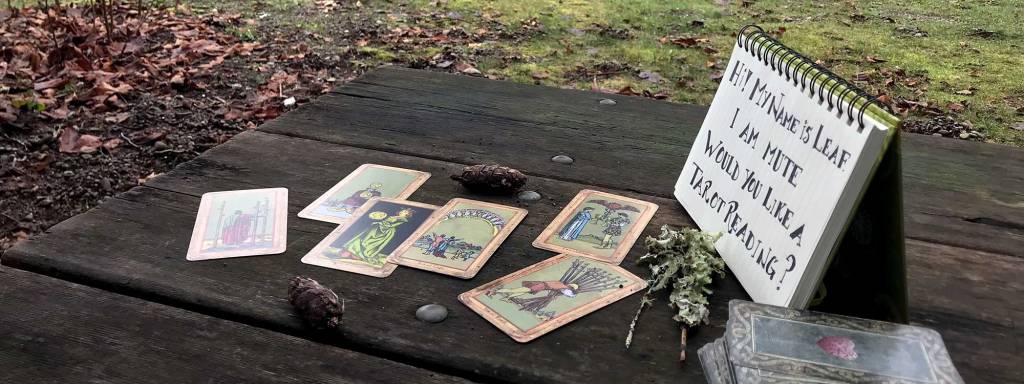
When reading for others, I read in a variety of different styles. Keep in mind I am mute, so when I say I am “talking” to someone it means I’m either typing words out in response on a device, using a text-to-speech app, or writing things down by hand for communication purposes. This slows down the process so what was once a 10 minute reading back when I had a voice is now about a 30 minute reading or more.

In Person Read then Discuss – In this method, I have a client face to face that comes to me with a question. They give me the information they want me to know and I draw cards to answer this question, and any additional rephrasing I might have that I want to add to the reading for clarification purposes. I do not look at the querent as I pull these cards, but instead I focus my attention on the cards until they are all laid out.

I take a few notes, then use either hand written, typed on a screen, or text-to-voice to convey the message of the cards in detail. Once that is done, I ask if they need clarification on anything, and if so, we talk about it and I might draw another card or two.

In Person – Free Form – Again, a face to face client sits down and we begin to talk about a situation or event that they need some clarity on. In this method, ass we talk I will continuously overhand shuffle the cards. Each time a card pops out of the deck, we pause the conversation and I use the card to help direct where the conversation goes and provide needed answers and advice.

When the discussion starts to circle back on itself, it’s an indication that we’ve reached the end of what the cards can give, and I ask if they need any further clarity. If they say yes, I might draw a card or two more if it is needed (or recap what has already been said if new cards are not needed), and then close things out.

Online – Read then Discuss – In this method, my client contacts me through digital means (usually through email or purchasing a reading off my website) and can share as little or as much of their situation as they want, as well as the purpose of the reading. From there, I draw cards based (usually) upon how many cards they’ve paid for being drawn (sometimes I draw more, which I don’t charge for).

I type out the interpretation of the cards and I send the reading to them including a picture of the cards, and give them the opportunity to ask for clarification on anything involved in the reading if needed. Said clarification may come with an extra drawn card or two, or may simply need to be a recap / rephrase of what the cards have already said.

Online – Free Form – I usually save this particular method for friends and clients that I still have that I’ve had since prior to losing my voice. Especially since the pandemic, as face to face readings are not as easy to manage these days.

This method is done using instant messages, texts, DMs or other instant messaging type of method, we talk about what’s going on with them and between my replies while they are typing and while I’m reading, I shuffle cards and allow cards to pop out to provide guidance, advice, and answers.

Like an in person free-form reading, this is a discussion. I take pics of the cards along the way and send them to my client/friend as we go.

When the discussion either circles back or starts to peter out, it means the reading is then drawing to an end and I make sure they don’t need clarification on anything. I then send them a picture of their full reading with all of the cards on the table to close things out.

#TarotCollector a (non) VR to MoonBaby

Today’s post is inspired by Brant’s #TarotCollector challenge over on his channel, Moon Baby on YouTube. Your most expensive deck

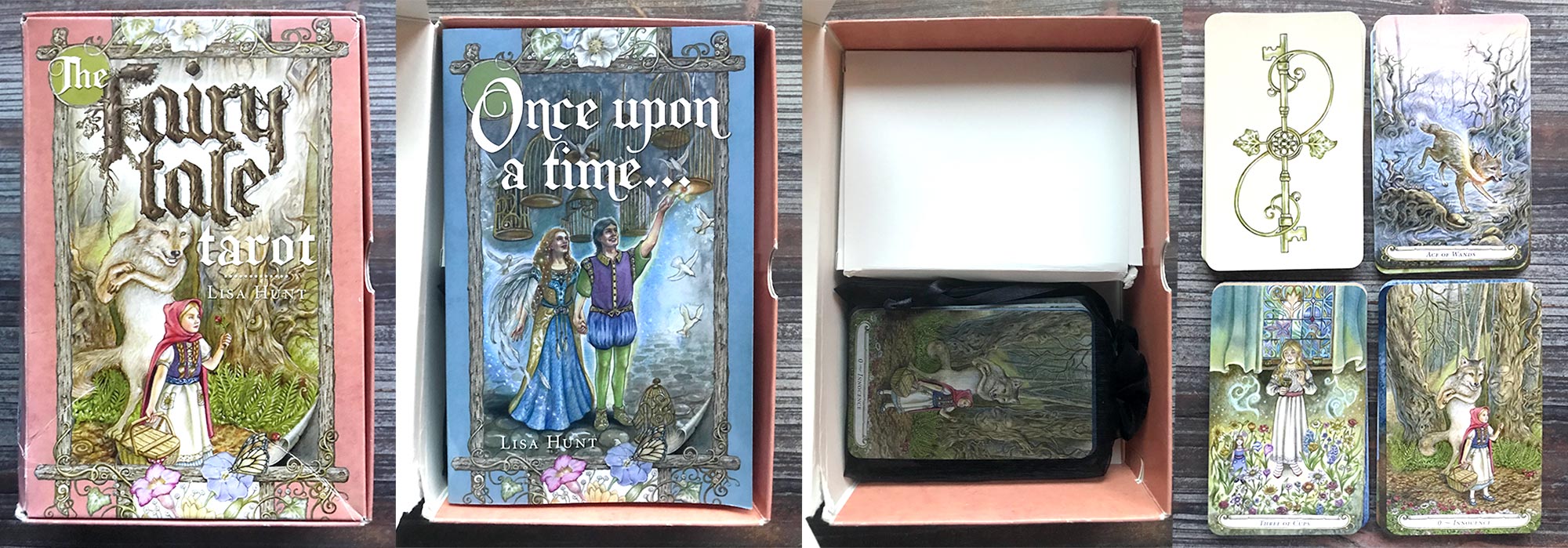
The Fairy Tale Tarot by Lisa Hunt

Your most expensive deck: The Fairy Tale Tarot by Lisa Hunt (English Edition). I had this one a handful of years ago when it was first published and it was destroyed in an accident. I paid a hell of a lot more than the publisher’s price to replace it when I finally got around to replacing it. It’s one of the few decks that I’ve kept the box for.

Student Tarot No.5
Student Tarot Version 5

Your least expensive deck: I have a number of decks that I’ve gotten for free over the years, either as gifts, prizes, etc. But this is my least expensive deck that I actually paid money for. It cost me just a few cents under $3. I’ve had a few playing card decks I’ve payed less for over the years, but I was trying to primarily stick to tarot for this challenge (although you’ll see I did deviate on an answer later on).

The deck other collectors want to steal from your collection: See the first question above. I probably have a good number of decks that people would like to steal from my collection, but since my motivation for collecting seems a bit off from others’ I’m not sure I have a very good idea which ones they’d be. Probably a good number of my Il Meneghello decks.

Deviant Moon Tarot Borderless Edition

Your strangest deck: Okay… so I confess. I have a LOT of really strange decks. I’m a big fan of really strange decks. And, I know that a lot of people don’t find the Deviant Moon Tarot to be a strange one, but I do. Definitely. And as many other strange decks as I get? This one always tops the list for me. So I’m going to say that my strangest deck is the Deviant Moon Tarot.

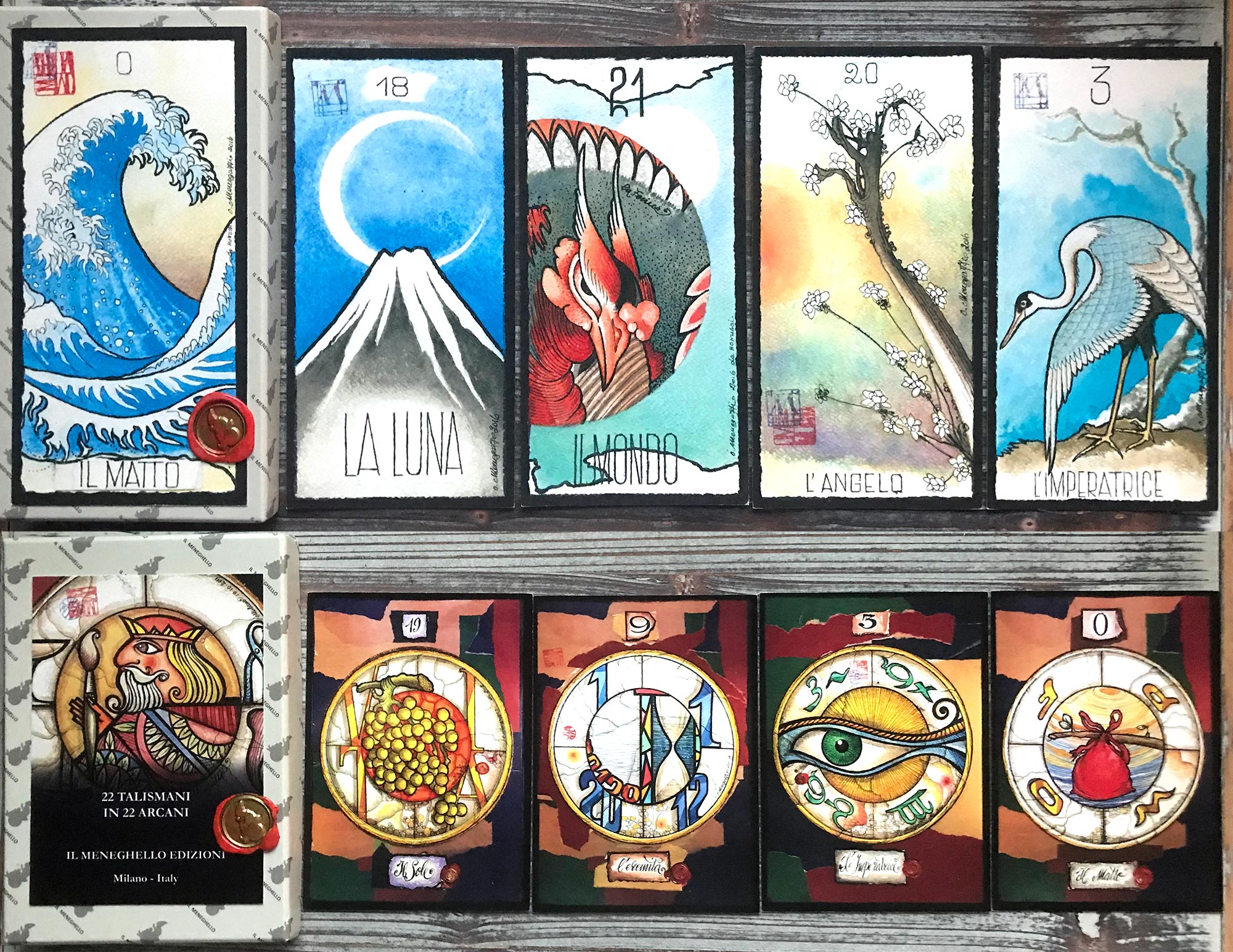
Hokusai Tarot and 22 Talismani in 22 Arcani Tarot
Hokusai Tarot and 22 Talismani in 22 Arcani

The deck other collectors are least likely to have in their collection: Honestly? Any of a number of my Il Meneghello decks would fit in this category probably. Not just because they are limited run decks, but because they are not really all that well known. Add to that that a number of those Il Meneghello decks are majors only decks and… well I picked two of my favorites and went with them.

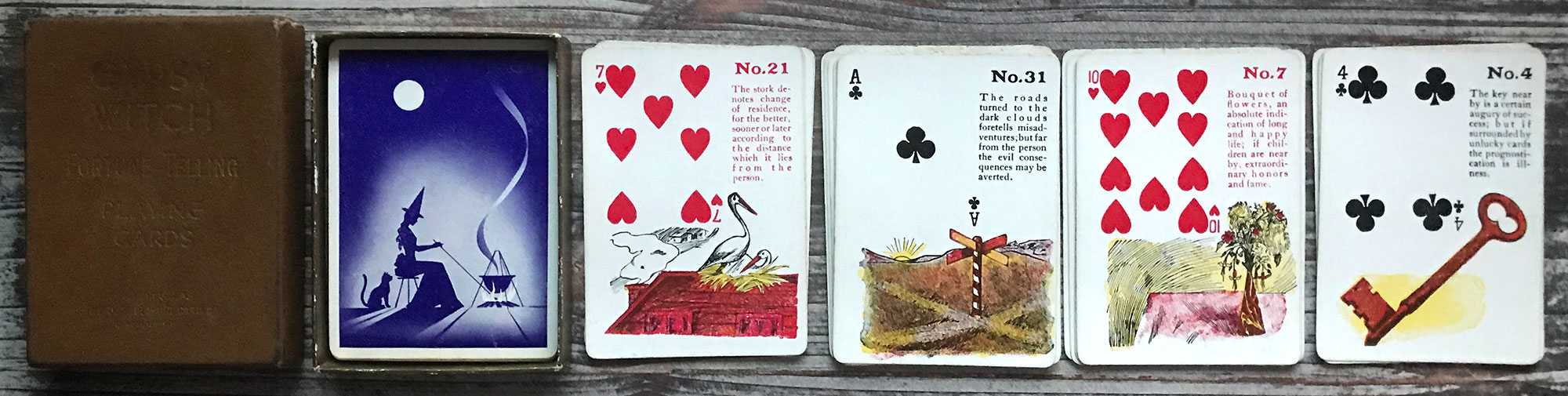
Gypsy Witch Fortune Cards c.1920
Gypsy Witch Fortune Cards c. 1920

Your oldest deck: This one, I went by publication date. And it’s the only category that I strayed away from tarot. My oldest deck by publication date is my mother’s set of the Gypsy Witch Fortune Cards that was printed in 1920. Alternately, I also have my great great (great?) grandmother’s canasta set that she used to read divination with, but I have no idea what the publication is on that one so I didn’t include it here.

Sacred Circle Tarot
The Sacred Circle Tarot

The deck you’ve had the longest: For this question, I switched back to tarot only I started with tarot when I was fourteen years old. Before tarot, I was taught lenormand and playing card reading and I have had decks of both far back into my childhood. But I honestly don’t remember which was my first… or second… or fifth. I do, however, know which deck was my first tarot deck and thus, the one I’ve had the longest. That would be the Sacred Circle Tarot. As you can see from the pictures? I have modified the fuck out of this deck.

Tarot of Trees and The Revived Gassmann Tarot Marseilles
The Tarot of Trees 10th Anniversary Edition and The Revived Gassmann Tarot Marseilles

Your newest deck: In my last visit to the post office, I had a good handful of decks come in, but the two that really stuck out to me the strongest were these two. The Tarot of Trees 10th Anniversary Edition is a beautiful large-card version of the earlier deck that came out in small cards. And The Revived Gassmann Tarot Marseilles that came out this year from Patrick Valenza.

Herbal Tarot and the Hanson Roberts Tarot
The Herbal Tarot and the Hanson Roberts Tarot

The deck that made you want to collect decks in the first place: After the debacle of the Sacred Circle Tarot as my first deck, I was a bit discouraged as I couldn’t connect to the Sacred Circle at all. Then I got my hands on the Herbal Tarot and the Hanson Roberts Tarot within weeks of each other, and it made me realizes that there was a great deal of potential out there to tap into. I’d made a mistake with my first tarot deck, and ended up with something that didn’t work for me at all and thus was extremely difficult for me to read. When these two came along, it was a breath of fresh air and I’ve been collecting ever since.

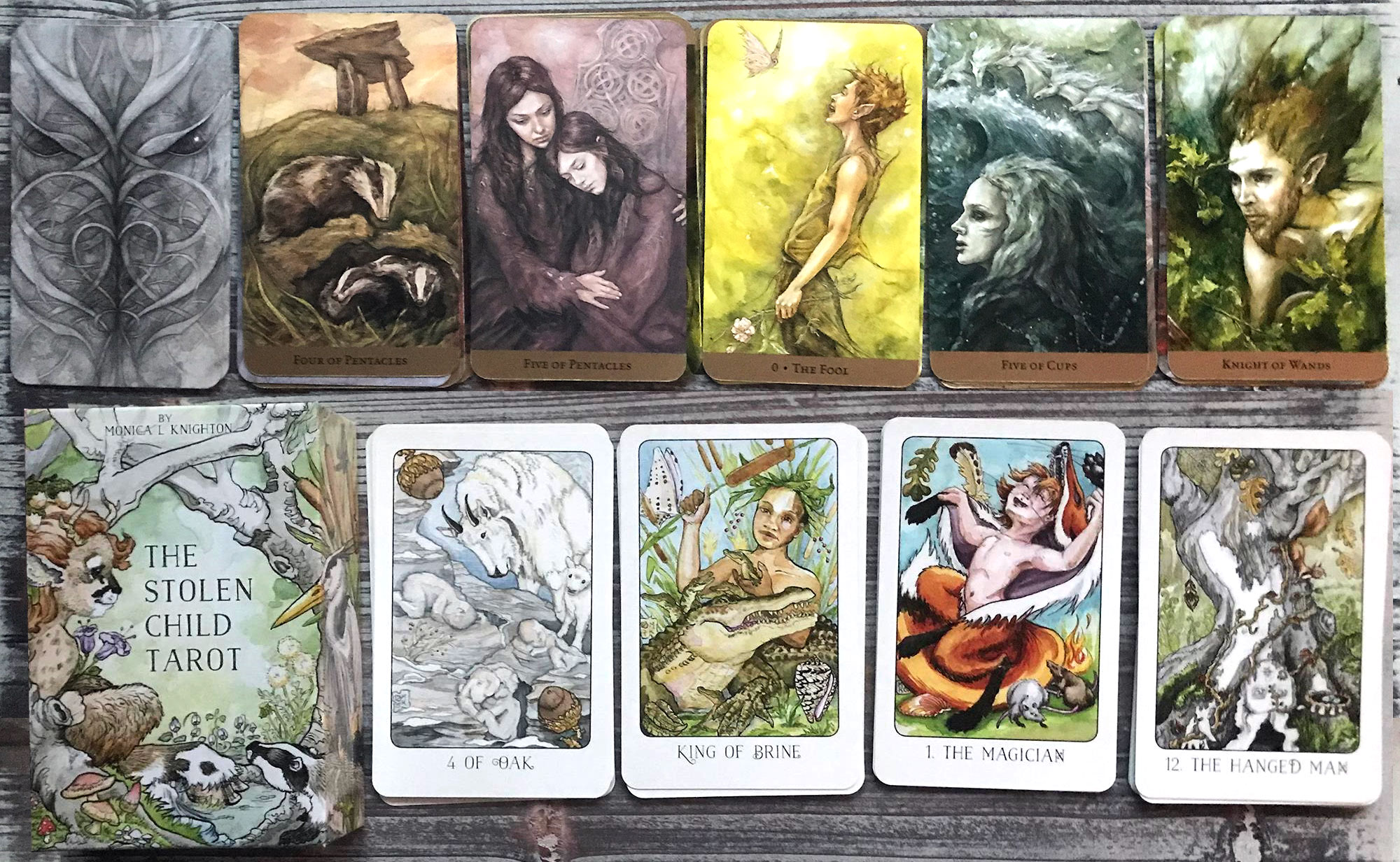
Tarot of the Hidden Realm and The Stolen Child Tarot

Your favorite deck from your collection: I am unable to pick one but I can manage to whittle it down to two. My two absolute favorite decks are the Tarot of the Hidden Realm and The Stolen Child Tarot. There are a couple of runners up tho….

Hush Tarot, The Brady Tarot, The Botan Tarot
Hush Tarot, The Brady Tarot, and The Botan Tarot

The three above are my runners up to my favorites. The thing is? Interestingly enough all five of these are relatively new decks. I’ve been collecting decks for eighteen years, and other decks besides tarot for even longer, but it hasn’t been until these last few years that I’ve actually managed to find decks that I deeply connect with. I had favorites before them… absolutely. But the connection is not the same as what I have with these decks mentioned here now.

Samhain and Halloween In My Practice

Today’s post is brought to you by one of my Discord servers. Below are some discussion questions that were posted for a “witchy chat” that they had on their server. Although I couldn’t attend the chat, I thought I’d answer the questions here.

Samhain Questions

  • Is Samhain a holiday you celebrate or intend to celebrate?

Absolutely. Samhain is a holiday that my sister and I celebrate together each year.

  • What does Samhain mean to you?

Samhain is the time of year when the veil is at its thinnest between our realm and that of the spirit world. It is a time to acknowledge and honor our ancestors and those loved ones that have passed on. It is also the witch’s new year, and marks the end of the wheel of the year’s cycle. After Samhain, the world goes into dormancy for a time and will then begin to rouse once more following Yule in December. This makes Samhain a perfect time for letting go of the past and past habits.

  • What are your Samhain plans?

Each year my sister and I have a dumb supper to honor our ancestors and loved ones, followed by a ritual with much of the same theme. At the end of the ritual we include spellwork to assist in the letting go of things best left behind as we move forward and step into the energy of a new cycle on the other side.

  • Do you consider Samhain to be the start of a new year? Do you have any “New Year” traditions you enjoy on Samhain?

I think I pretty much covered this above. L has shifted her new year to Beltane in the spring, but she still also participates in my celebration of it during Samhain in the fall. So in essence, we’re celebrating two new years, each one distinct from the other. For the fall new year, we often will write out things we wish to leave behind on bay leaves and cast them into the fire to release their energy from our lives. This part of our ritual is something we include each year without fail.

  • Do you celebrate any other holidays around the same time as Samhain? What are they? How do you celebrate?

No. My previous holiday was Mabon in September, and my next will be Yule in December. That said, there are a lot of concepts of Samhain that are shared by other holidays in other cultures, a common theme and common thread of beliefs connecting these different holidays around the world.

  • What do you think of the way that October has become “the season of the witch”? Do you enjoy that witch-themed things become more mainstream for at least a little while?

I don’t mind it. I guess the commercialism of it all should bug me. But the thing is? It is a time of year that makes it easy to find certain supplies and decor that you just can’t seem to get your hands on any other time of year. It opens society to a more accepting (if commercialized) view, which in turn makes it less dangerous to be a witch in the first place. So, in accepting the good with the bad, I suppose a little “Season of the Witch” each year isn’t an entirely horrible thing.

  • Do you separate Samhain from Halloween and celebrate them distinctly from each other?

To me “Halloween” is about candy, parties, and trick or treating. It’s about costumes and fun and games. So yes. It is very much a separate thing from the solemn and respectful theme of Samhain.

I absolutely do celebrate both, sometimes with more leaning on one than the other… but always both.