Labels and My Spiritual Path


People love to hate labels, and yet… hate to love them too. The debate goes both ways. Labels are lazy, harmful, or limiting in some way… or, labels are a “container” for a set of characteristics with the purpose of effective and clear communication

I fall in the latter category, although I see and understand the other side of the coin. The truth of the matter (at least in my observation) is that whether you hate them or love them, they’re necessary for clear communication.  

I wear a lot of labels, this post specifically is about those in my spiritual practice, though.  In one of the communities I’m a member of on Discord, a question came up asking, “Which terms do you use to talk about yourself and your craft? Why do you prefer those terms?”

Here are my answers:

  • Witch / Witchcraft – It just feels like a term that’s easy enough to communicate without confusion.
  • Pagan – Lots of people in society at large are uncomfortable with the word “witch”, and they find “Pagan” as more palatable with less negative connotations. It also feels like this term connects my witchcraft to my spiritual practice. Not all witches see that path as spiritual, but for me they are very much connected. 
  • Practitioner – Also a more “politically correct” term that makes non-witchy people more comfortable when speaking on the subject.
  • Spellwork / Spellcraft – These are the terms I grew up using when speaking of witchcraft workings.
  • Eclectic – This term fits because although I have a foundation in Wicca, I’ve been pretty much “winging it” in my own personal way for decades. I do a lot of “dabbling” in other types of witchcraft outside the ones listed below that I consider my “home base”, just to see how things work or how it feels. Sometimes these new experiences get adopted into my practice… but usually, even if they’re successful, they are not. 
  • Gray – This one is due to how my ethics work. I don’t have a lot of “set in stone rules”, and instead everything depends upon my gut/moral compass. What’s right one day may be wrong the next due to change in circumstances or other factors, and vice versa. It’s very wishy-washy, and could be viewed differently by different people as a result. 
  • Green / Forest – My practice leans very heavily into revering nature and her cycles, spending time in nature/communing with nature, researching nature, etc. This includes practicing with a wide variety of plant matter in a myriad of ways, as well as stones, crystals, soil, and other such detritus from nature.
  • Hedge – I spend time within, and draw energy from, liminal spaces. Especially liminal spaces among the trees and in forest areas. I feel that for me, this is a “sub-category” of Green/Forest.
  • Cottage / Hearth – I would say that my practice is split between Green / Forest and this category. My home is my sacred space and most everything in it is geared towards my spirituality and practice in some way.  Including things like cleaning, bathing, laundry, etc. I would also classify my jewelry making spellwork under this term. 
  • Kitchen – Ties in the Cottage/Hearth factor with the Green side of things in that one of the ways I commonly use plant matter in spellwork (and practice spellwork as a whole) is through cooking, tea making, baking, etc.
  • Tarot Reader / Cardslinger – It’s what I do. Quite literally with the word “cardslinger” since I pull my cards through jumpers instead of picking off a pile. I do a variety of other divination techniques, but using cards is pretty much “home base” for me. To be fair, I read all kinds of cards other than just tarot regularly. (ie: Lenormand, oracle, playing cards, image only cards, game cards, etc.) But the term “card reader” never seems to be something people understand, so I don’t use it.
  • Fortune Teller – I do predictive readings (usually using cards).
  • Mediumship – In my divination practice (and occasionally outside of my divination practices), I sometimes communicate with the dead.

Because I lean into experimentation, there’s a lot of other terms that could be used to describe my practices, but I feel like none of them really weigh heavily enough in my practice to break out of the “eclectic” container and stand alone on their own.  

It was an interesting exercise to look at my spirituality and practice in this way, and I feel that it helped me in seeing my own path in a more organized light.  I’d definitely encourage others to do a little examining of their own paths and see what they come up with as well. 

Remember, just because a label fits doesn’t mean you’re restricted by it. It’s just a word to help in communicating with others. After all, we don’t call a mug “that cylindrical thing that holds the hot drink made with brown beans”. We call it a mug, even when it holds paperclips instead of coffee.

Elemental Influences

Prompt: “What elemental system do you ascribe to? What are the correspondences of the elements in the system you use? What is associated with the elements? What are some other systems you know? Do you ascribe to more than one system, and if so where do you use/incorporate which?

My faith is a four elemental system.

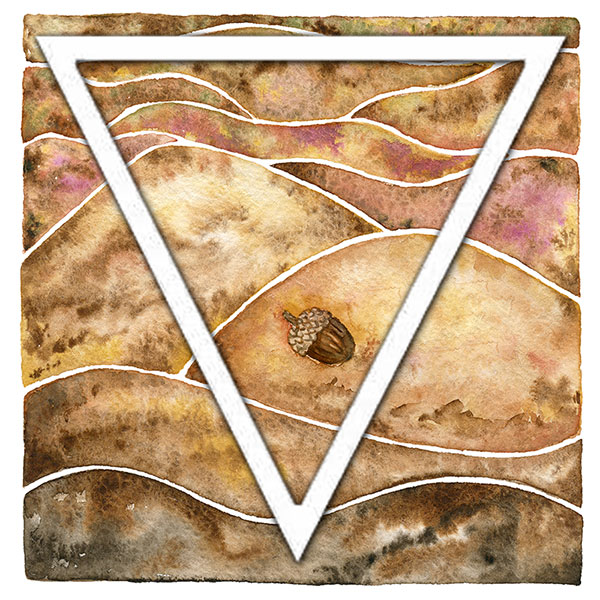
Earth is plants, soil, growing things, material things, the physical world, manifestation of items to the physical plane by creativity or spellwork. It includes our earthly pleasures like food and wealth. Its direction is to the North. The energy is solid and calm. The element of Earth is dark and still, nurturing and heavy. Grounding lives here among the tree roots. This element is the one that is most within our control and is filled with foundational strength.

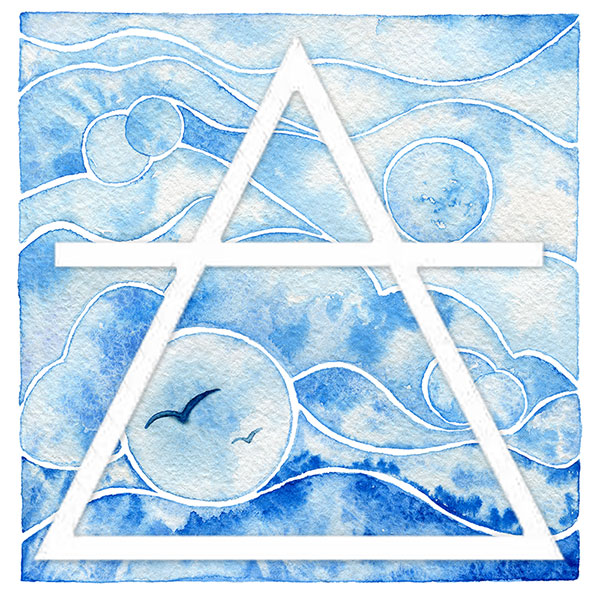
Air is air and ether, wind and turbulence, strategy and thought. Communication and ambitions live here until you act upon them (then, once action is applied, they move to Fire). It’s direction is to the East where ideas rise from the depths of our mind like the sun rises over the horizon. The energy is ever moving and never still, restless. Although we can control our thoughts to a point, there is an element of lack of control here that is not present in the previous element.

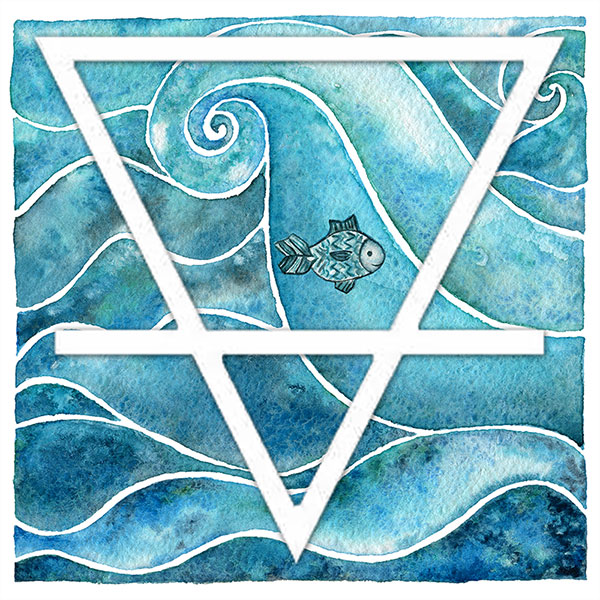
Water is for wet, and is refreshing and welcoming. Comforting and soothing. Its direction is to the West. Emotions and the flow of creativity reside here, as well as intuition and the subconscious. Spirits of those that have passed often linger here in this energy. As emotions are far less easily controlled than thought, so Water becomes the third element as we get further from the earthly plane and closer to divinity. Centering oneself lives here in the depths of still waters and quiet calm among pondweed and cattails.

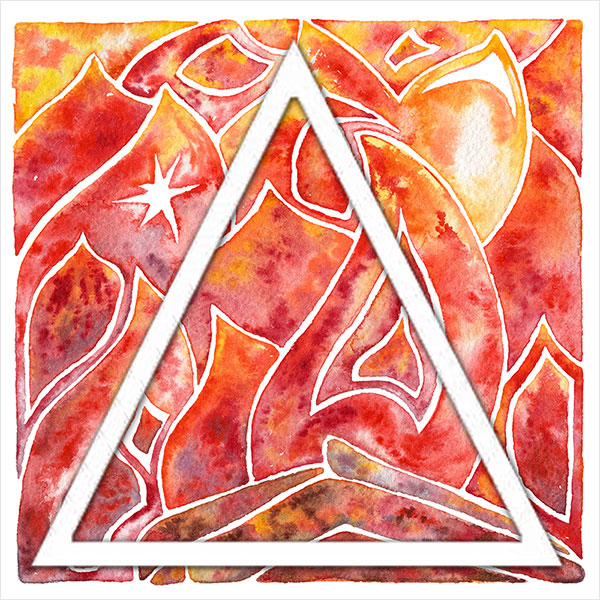
Fire is for flames, heat, and enthusiasm. It’s direction is to the South. It is what lights us up from within and pushes us to act. Too much fire will burn your life to the ground, too little leaves your life empty and listless. It’s energy dances and sparks, for it is through action that this element is most commonly expressed. It is the fervor of our lives, and is where our ethics and principles stand tall. Pride also lives here. Within this element, we have the least control, for it is where our soul sings out to speak of what is right for us… and what isn’t.

You will note that although the four elements above climb a ladder from what is most in our control to what is least in our control, there is no element here for divinity. Each of these elements holds their own spirituality within them. Divinity, for me, resides beyond and “above” these elements and is best defined as the energies of creation, evolution, and balance. I do not feel that it is an element, so much as the beginning and end of all things… and all that lies between those two points as well.

Having been raised Wiccan, I am of course very familiar with Wicca’s five-element system (earth, air, fire, water, spirit) of that faith. I am also familiar, through my father and research, with the Japanese Gogyo system of five elements (fire, water, wood, metal, earth). Although the Wiccan system is similar to what I use now, I don’t use either of these systems in my practice at this time.

Day-to-Day Divination

Prompt: “How do you incorporate divination into your day-to-day life?

Ok so first, I guess that I should point out that, although I know a vast array of divination techniques including pendulums, rune casting, charm casting, stick and stone casting, stichomancy (aka bibliomancy with regular books), tasseomancy, dice casting, etc… my main method of divination is (not surprising anyone here) cards. All kinds of cards, but cards all the same. So when I refer to day-to-day divination, it is with this method I refer to, as the others are just occasional use. So, here we go…

1) For the past two years, I have been doing a COTD mental health exercise. My shrink wanted me to start a “daily affirmation” meditation exercise. But none of the affirmation generators I could find were giving me anything I could relate to or even take seriously. I switched it up to a COTD exercise where I ask for “a positive message to carry with me throughout my day and foster perspective” and whatever card comes out I have to find the positive message in the card for me that day, then meditate on it and journal it. Surprisingly, it has helped immensely in my day-to-day life, and also in climbing back out of the dark pit of depression whenever an MDE sneaks up and swallows me whole.

2) Client readings. It’s nearly a daily thing. So… yeah. Client readings.

3) Writing exercises. I often use cards as prompts and as “flavor” in my writing, whether it’s just little short stories, a poem, or long drawn out interactive storytelling with Gideon.

4) Teaching. I teach tarot, lenormand, and cartomancy. At any time over the past decade (or so) I have sustained between 1 and 6 pupils/mentees depending on my workload and energy levels. Not to mention past pupils and mentees that come back from time to time with questions, thoughts, or just a need to discuss something in order to help them wrap their head around it a bit better.

5) I help run a server that is a tarot focused learning environment on Discord. I occasionally teach classes on the server, and I spend a good deal of time there helping others, answering questions, and just hanging out with others with similar interests.

6) Personal readings. I read for myself daily by doing monthly challenges, and I share those readings here on my blog as well as on the server mentioned above. The purpose of this is three fold, as it allows me to check in on myself, it allows Gideon to check in on me and get an in-depth look at how I’m doing emotionally and otherwise, and it provides examples for that learning server I mentioned for those that want or need to observe how others read the cards and their process in doing so.

Thinks… I think that’s it. It’s probably not, but I think it is.

Oh yeah. Lets not forget about deck shopping. I window shop (and often buy) decks on a pretty regular basis.